
DUBAI, UAE — A massive wave of travel disruption has swept across the globe following U.S. and Israeli military strikes on Iran, leaving hundreds of thousands of passengers stranded and major international flight hubs in a state of paralysis.
The conflict has directly impacted the world’s most critical transit points. Airports in Dubai, Abu Dhabi, and Doha—the primary bridges connecting Europe and the West to Asia—have been hit by strikes, forcing immediate shutdowns.
- Casualties at Terminals: A drone strike at Zayed International Airport in Abu Dhabi reportedly left one person dead and seven injured. At Dubai International Airport, four people were injured following missile strikes.
- Explosions in the City: Travelers in Dubai reported hearing constant fighter jets and at least one major explosion when a missile struck the Fairmont Palm Hotel.
Aviation analytics firm Cirium estimates that at least 90,000 people per day usually transit through Dubai, Doha, and Abu Dhabi on Emirates, Qatar Airways, and Etihad alone.
- Flight Cancellations: Over 2,800 flights were canceled on Sunday alone.
- Regional Blackout: Airspace has been closed across Israel, Qatar, Syria, Iran, Iraq, Kuwait, Bahrain, Oman, and the UAE.
- Global Echoes: The ripple effect reached as far as Bali, Indonesia, where over 1,600 tourists are stranded, and major airports in London, Mumbai, and Paris, which reported dozens of cancellations.
Major carriers have suspended operations as they wait for the security situation to stabilize:
- Emirates: Suspended all flights to and from Dubai until at least Monday afternoon.
- Air India: Halted flights to the UAE, Saudi Arabia, Israel, and Qatar until Tuesday.
- EL AL: The Israeli airline has closed ticket sales through March 21 to prioritize flying home citizens currently stranded abroad.
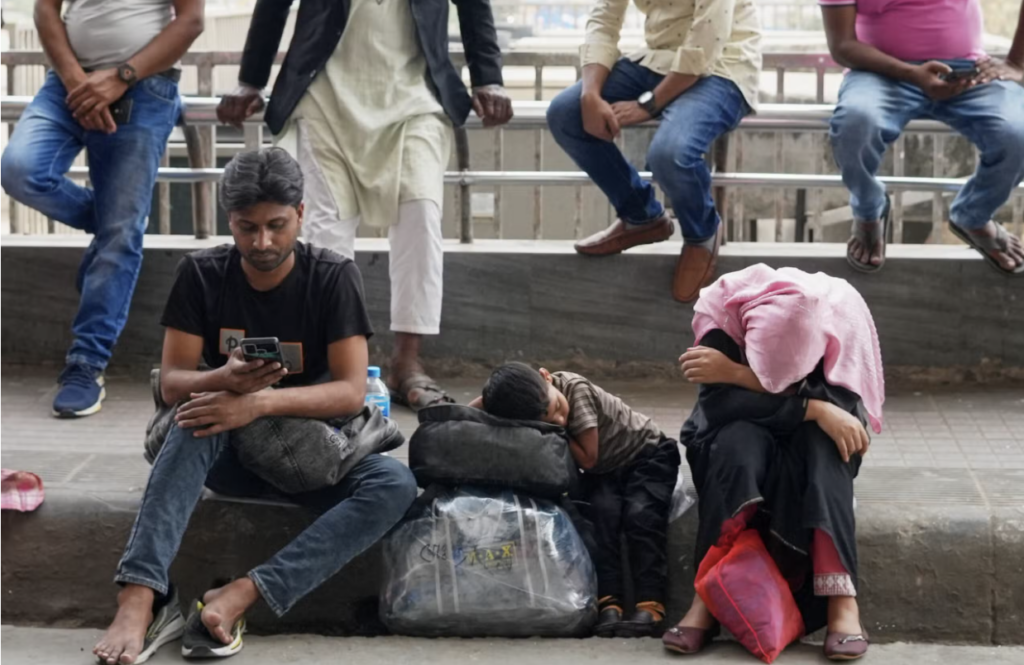
For many, like Mohammad Abdul Mannan at Dhaka’s airport, the concern is less about the war and more about survival. “I need to get to the Middle East to make a living,” he said. “My only concern is how to go abroad and earn an income.”
Others, like American business traveler Kristy Ellmer in Dubai, are sheltering in hotels, staying away from windows to avoid shattered glass from nearby explosions. “You hear a lot of explosions at times, there’s hundreds of them,” she said.
Aviation analysts warn that the disruption will likely last for several days even if the strikes end immediately. Airlines are being forced to reroute flights south over Saudi Arabia, leading to significant delays and increased fuel costs, which will likely be passed on to consumers in the form of higher fares.