
LONDON, United Kingdom — Global oil prices surged past the $100 mark on Thursday as Iran’s new Supreme Leader, Ayatollah Mojtaba Khamenei, ordered the continued closure of the Strait of Hormuz. The move has intensified fears of a prolonged energy crisis, with markets reacting sharply to the effective blockade of one of the world’s most critical maritime chokepoints.
Brent North Sea crude, the international benchmark, peaked at $101.59 per barrel, representing a 38% increase since the onset of the U.S.-Israeli conflict with Iran on February 28. West Texas Intermediate (WTI) also saw double-digit percentage gains, trading near $95.38. Analysts at IG noted that the price spike reflects growing realization that the U.S. is not yet prepared to institute a naval convoy system to secure shipping routes.
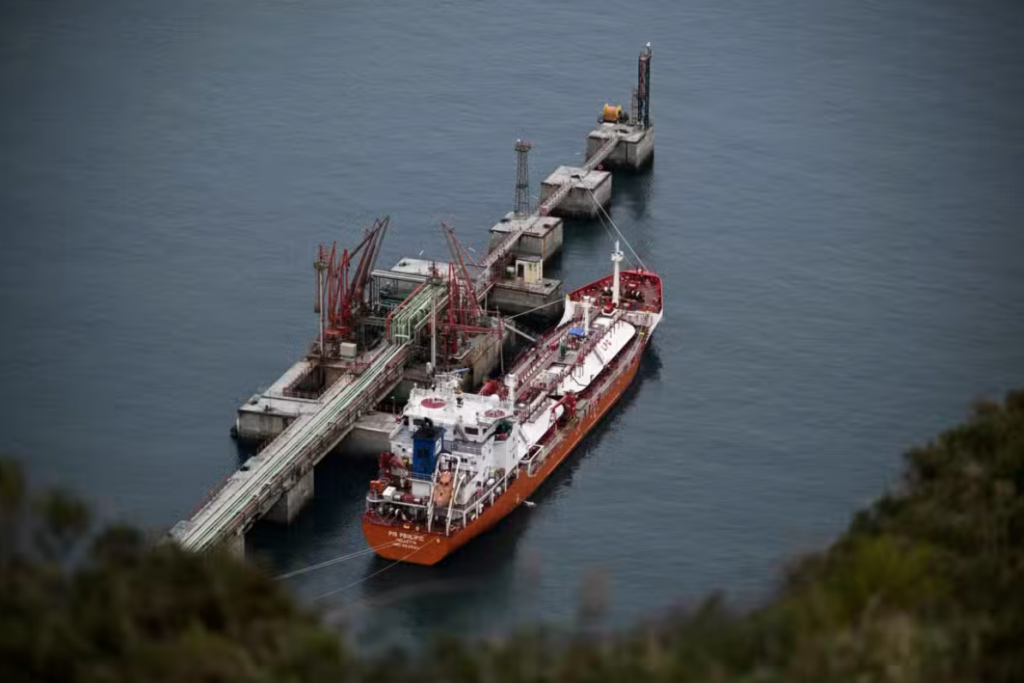
The Strait of Hormuz typically handles roughly 20% of global oil and liquefied natural gas (LNG) trade. According to UNCTAD, daily ship transits have plummeted from an average of 129 in February to just three as of early March. The International Energy Agency (IEA) has labeled this the “largest supply disruption in the history of the global oil market,” even as member countries approved a record release of 400 million barrels from strategic reserves—a move that has so far failed to cap rising prices.
Iran’s Revolutionary Guards have vowed to enforce the closure, targeting commercial vessels and regional energy infrastructure. Recent reports include attacks on tankers off Iraq and drone strikes near Dubai. U.S. Energy Secretary Chris Wright stated that the U.S. military is currently focusing on “destroying Iran’s offensive capabilities” and is “not yet ready” to provide escorts for oil tankers.
The economic fallout is spreading rapidly. Stock markets in New York and Asia have extended their losses, while the U.S. dollar has strengthened due to safe-haven demand and inflation fears. In Southeast Asia, governments are already implementing emergency measures, such as the Philippines’ transition to a four-day work week and price caps in Thailand, to manage the deepening fuel shortage.