
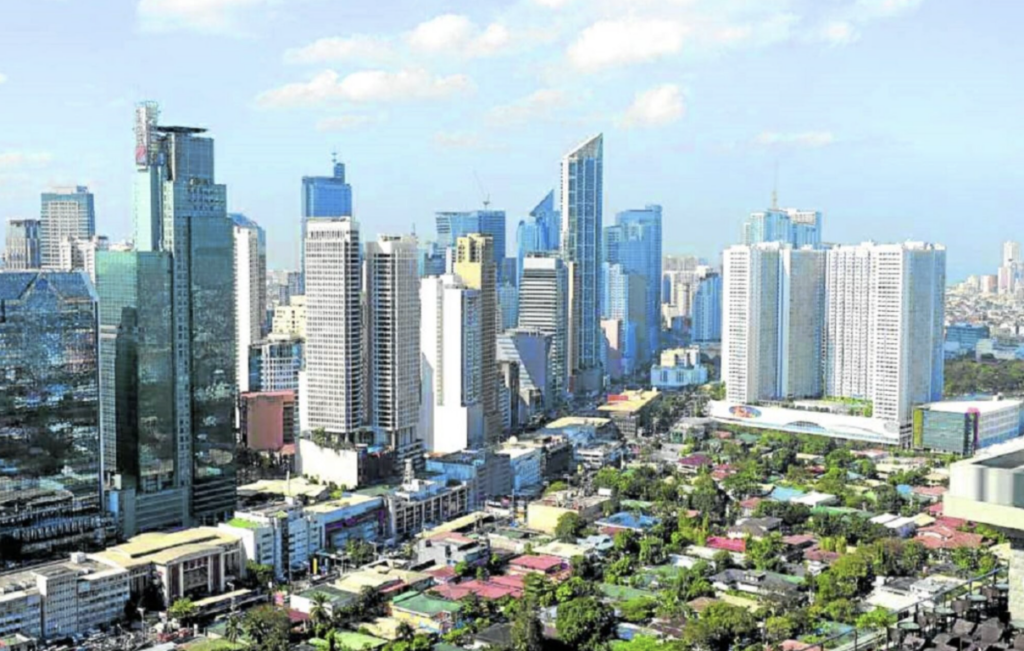
MANILA, Philippines — Rising operating costs and shifting macroeconomic realities are forcing Philippine corporations to look beyond the borders of the national capital. A market study by real estate consultancy firm Prime Philippines reveals that the Visayas and Mindanao (VisMin) regions are rapidly emerging as the country’s next premier hubs for office, industrial, and logistical expansions.
The special property report, titled “Beyond the Metro: The Decentralization Playbook,” highlights that while Metro Manila’s central business districts (CBDs) remain highly stable, regional markets are capturing an increasing share of expansion-led development.
The structural shift toward decentralization is being accelerated by significant economic headwinds. The report identifies ongoing geopolitical friction in the Middle East as the “central disruptor” filtering down into the local property market, triggering a series of economic challenges:
- Macroeconomic Slump: Year-on-year gross domestic product (GDP) growth slowed sharply to 2.8% in the first quarter of 2026, down from 5.5% in 2025.
- Remittance Vulnerabilities: Due to regional conflicts, overseas Filipino worker (OFW) remittances are projected to contract by 7.8% this year, directly affecting consumer purchasing power since roughly 18% of these funds flow from the Middle East.
- Fiscal Friction: With the Philippine peso weakening to 60.1 against the US dollar in March, and localized inflation mounting, corporate tenants are prioritizing cost-efficiency.
[Middle East Conflict] ──► [High Fuel/Costs & Weak Peso] ──► [GDP Slows to 2.8%] ──► [Firms Pivot to VisMin]
To protect profit margins against rising Manila leasing rates, fuel costs, and construction expenses, companies are actively diversifying their real estate portfolios into the provinces. VisMin cities have become highly attractive alternatives due to lower labor costs, rapidly improving infrastructure corridors, and expanding industrial activity.
Crucially, the report notes that this shift is “additive, not substitutive.” Rather than entirely abandoning Metro Manila, major corporate players are building peripheral networks in regional cities to complement their primary urban headquarters.
Despite a challenging economic backdrop, the country’s broader real estate segments are demonstrating varying levels of resilience:
1. Industrial and Logistics
The industrial sector remains highly robust, driven heavily by supply chain networks. Warehouse supply has grown at an average annual rate of 1.8% since 2017 and is projected to expand through 2028.
While overall occupancy dipped slightly to 96.91% in Q1 2026 (down from a peak of 98.17% in 2025) as new facilities outpaced immediate tenant absorption, demand remains firmly anchored. Transportation and logistics companies have overtaken retail trade, capturing 45% to 48% of total industrial demand. Tenants are heavily favoring Grade A and Build-to-Suit spaces to lock in long-term operational efficiencies.
2. Metro Manila Office Spaces
The capital’s office space market held steady through the first quarter, maintaining an average occupancy rate of 85%. Performance varied considerably by district:
| Business District | Q1 2026 Occupancy Rate | Market Status |
| Ortigas Center | 90.6% | Market Leader |
| Bay Area | 68.5% | Lagging / High Vacancy |
| Alabang | 71.1% | Lagging / High Vacancy |
While average office lease rates hover around ₱900 per square meter, Prime Philippines warns that an incoming wave of roughly 342,000 square meters of new office supply by the end of 2026 could place downward pressure on rental rates and spike vacancy numbers. However, because demand remains fundamentally expansion-led rather than relocation-driven, steady requirements from business process outsourcing (BPO) firms, professional services, and government agencies continue to anchor the capital’s core footprint.