
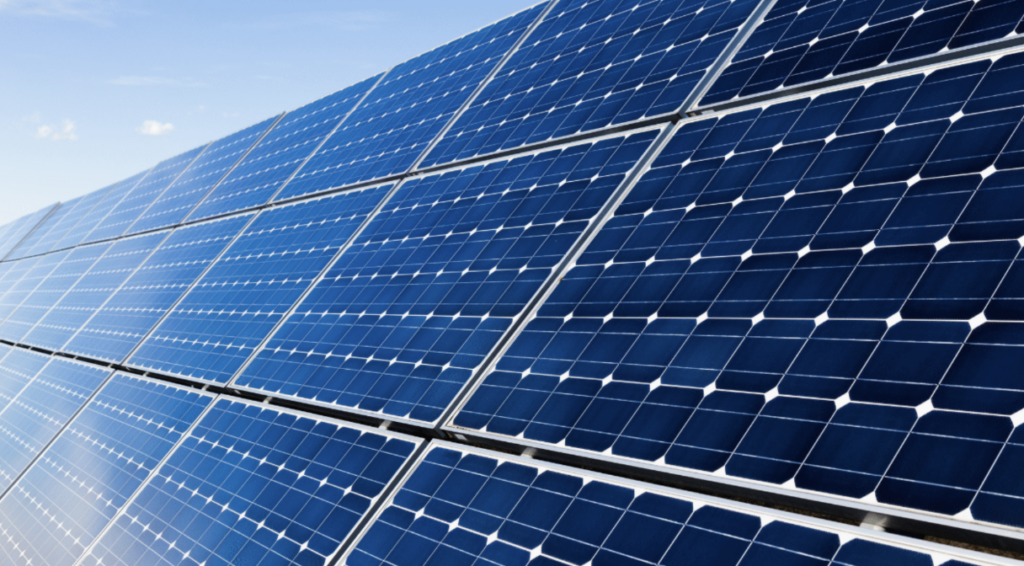
MANILA, Philippines — Driven by punishing electricity costs and frequent power grid instability, the Philippines has transformed into a premier global destination for clean tech. The Philippines has officially emerged as China’s second-largest export market for solar panels, trailing only the Netherlands—which serves as Europe’s central logistics entry hub.
The massive volume of hardware landing on local shores underscores an unprecedented, consumer-led migration toward energy independence.
Data compiled by the United Kingdom-based energy think tank Ember reveals that the local market’s appetite for solar technology is accelerating at a near-vertical trajectory:
                  [ 2026 PHILIPPINE SOLAR IMPORT ACCELERATION ]
                                       │
         ┌─────────────────────────────┴─────────────────────────────┐
         ▼                                                           ▼
   [ THE TWO-MONTH SPIKE ]                                     [ THE ROOFTOP CAPACITY EXPANSION ]
   March and April 2026 alone saw China                        Rooftop solar footprint surged to
   export **3,000 MW** of generation capacity                   **1,300 MW** by early 2026, up from
   to the Philippines—over half of 2025's                      just 721 MW recorded a year prior.
   full-year total (**5,068 MW**).
“The supply of panels is already on the ground. The economics are already there. Consumers are keen,” noted Dave Jones, chief analyst at Ember and lead author of the report. He highlighted that decentralized rooftop arrays are expanding rapidly because they can be deployed in a matter of days, bypassing the years required to clear and construct traditional utility-scale solar farms.
The primary driver behind this import phenomenon is not strictly ecological, but financial. Household budgets and corporate bottom lines are buckling under severe inflationary pressures from the conventional power sector:
                            [ REVENUE & ROOFTOP PAYBACK METRICS ]
                                              │
         ┌────────────────────────────────────┴────────────────────────────────────┐
         ▼                                                                         ▼
   [ THE RISING UTILITY PRESSURE ]                                           [ ACCELERATED RETURN ON INVESTMENT ]
   • **The May Power Shock:** Retail electricity rates distributed by        • **Residential Rooftops:** The capital payback window has officially
     Meralco climbed by **14% to 17%** in May 2026.                            dropped from four years down to just **3.1 years**.
   • **Grid Insecurity:** Outage threats across the Luzon and Visayas        • **Commercial Properties:** Corporate installation costs are being
     grids have made localized power generation a necessity.                  recovered even faster, hitting a record low of **2.3 years**.
The Ember report underscores that individual consumers and private businesses are moving significantly faster than state utility planning blocks. Rather than waiting for complex, multi-year grid integration projects or the expansion of costly fossil-fuel baseload plants, everyday Filipinos are taking advantage of plunging equipment costs to turn their own roofs into primary power stations.
| Solar Sector Classification | 2025 Baseline Footprint | Early 2026 Market Standing & Outlook |
| Rooftop Solar (Residential/Commercial) | 721 Megawatts (MW) | Swept to 1,300 MW as plunging hardware costs collided with retail tariff spikes. |
| Total Chinese Imports (Finished Panels) | 5,068 Megawatts (MW) | Positioned the country as China’s top market in Asia and No. 2 globally behind the Netherlands. |
“The economics of rooftop solar are more attractive than ever and its rapid rise is inevitable,” Jones stated, emphasizing that with the strategic pairing of localized battery storage, consumer rooftop solar actively strengthens the national grid infrastructure rather than stretching its limits.
As the Department of Trade and Industry (DTI) moves to finalize stricter standards to regulate the influx of solar panel equipment, the private sector’s massive pivot toward distributed solar power is providing a blueprint for energy security—proving that the quickest path to pulling the Philippines out of fossil fuel dependency is being built roof by roof.