
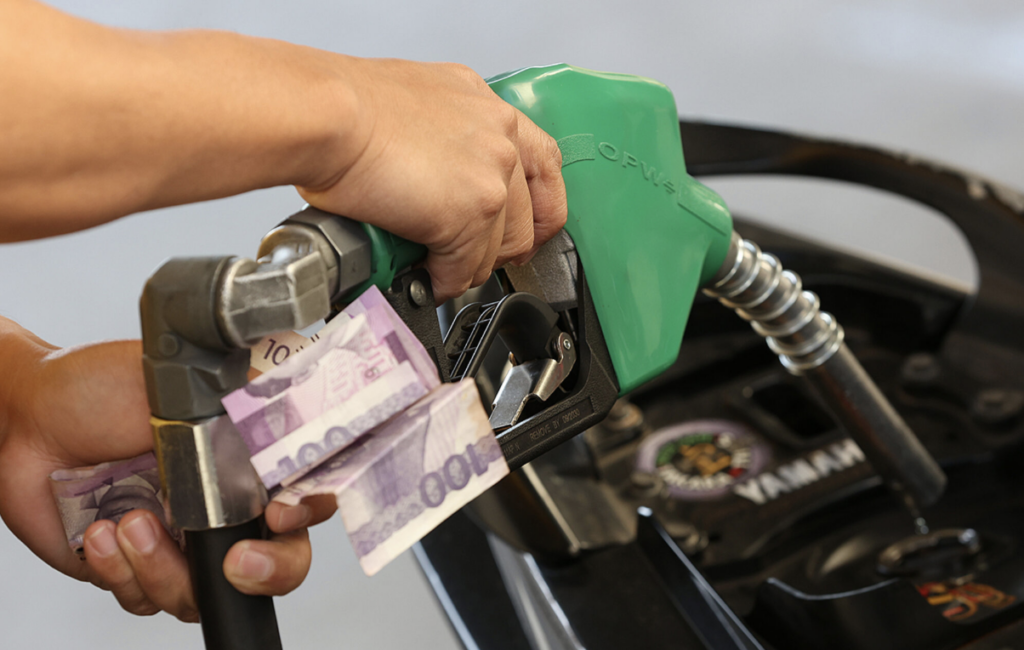
MANILA, Philippines — Providing long-overdue relief to local motorists and industries battered by months of war-driven inflation, local pump prices are finally falling back toward earth. The Department of Energy (DOE) announced a massive, “big-time” price rollback across all major fuel products, taking effect immediately.
Energy Secretary Sharon Garin noted that the aggressive price cuts are bringing domestic fuel costs significantly closer to “pre-Middle East crisis levels.”
The substantial downward adjustment completely erases the previous week’s upward spikes, shifting the market into a much more stable position for consumers:
                        [ JUNE 2 PUMP PRICE ADJUSTMENTS ]
                                        │
         ┌──────────────────────────────┼──────────────────────────────┐
         ▼                              ▼                              ▼
    [ DIESEL ]                     [ GASOLINE ]                  [ KEROSENE ]
  • **Per-Liter Cut:**           • **Per-Liter Cut:**           • **Per-Liter Cut:**
    Decreasing by **₱9.26**.       Decreasing by **₱4.76**.       Decreasing by **₱10.86**.
  • **New Metro Range:**         • **New Metro Range:**         • **The Context:** Follows an
    Slashing pump prices down      Falling down to a range of     extended period of high, volatile
    to **₱67.14 to ₱89.24**.       **₱67.64 to ₱104.74**.         cooking and heating fuel costs.
The “prewar” benchmark refers to the period immediately preceding February 28, when a series of explosive military bombing attacks broke out in the Middle East, causing severe damage to global energy infrastructure and triggering the closure of the strategic Strait of Hormuz—a vital marine passage responsible for roughly 20 percent of global oil supply.
The trajectory of the resulting domestic price shock highlights the sheer scale of the disruption:
[ THE DOMESTIC PUMP PRICE TRAJECTORY ]
                   │
                   ▼
[ Pre-Crisis Baseline (Mid-February) ]   ──► Gasoline sat between ₱49 and ₱77.03; Diesel ranged from ₱48 to ₱73.61.
                                               │
                                               ▼
[ The Middle East Crisis Flashpoint ]     ──► Bombing attacks knock out infrastructure and freeze global shipping.
                                               │
                                               ▼
[ Peak Crisis Spikes (March–May) ]        ──► Emergency supply shortages cause Metro Manila diesel to rocket to **₱172 per liter**.
                                               │
                                               ▼
[ The June 2 Dynamic Rollback ]           ──► Stabilization allows prices to drop toward the baseline **₱60-pesos "prewar" target**.
The scale and uniform execution of this week’s drop highlight a fundamental structural shift in how local oil retail operates during national crunches. Following a declaration of a state of energy emergency by President Ferdinand Marcos Jr., the DOE has temporarily bypassed standard elements of the Oil Deregulation Law.
| Regulatory Layer Status | Standard Deregulated Framework | Emergency State Framework (Active) |
| Pricing Controls | Retailers independently set pump prices based purely on individual import costs and free-market forces. | The DOE holds explicit legal authority to dictate minimum rollbacks and cap maximum increases. |
| Market Uniformity | Pricing adjustments fluctuate highly across different brands, locations, and localized retail zones. | Imposed to enforce predictability, preventing local price gouging and ensuring uniform relief for motorists. |
| Supply Moats | Companies manage inventory buffers entirely based on corporate storage capacity and private margins. | Active Buffer Safeguard: The state confirmed national inventory reserves sit at 45.97 days of consumption as of May 29. |
Secretary Garin expressed optimism that as long as international diplomatic tracks between Iran, Israel, and the United States hold steady and prevent further infrastructure damage, pump prices will continue to stabilize. While some private oil companies have raised financial concerns regarding freight overhead, the state is continuing dialogue with industry players to review cost filings while keeping emergency retail mandates active. For a domestic market dealing with inflation rates that likely breached 8 percent in May due to elevated transport logistics, this big-time fuel rollback serves as an essential economic break, throwing a vital lifeline to public utility drivers and consumers across the country.