
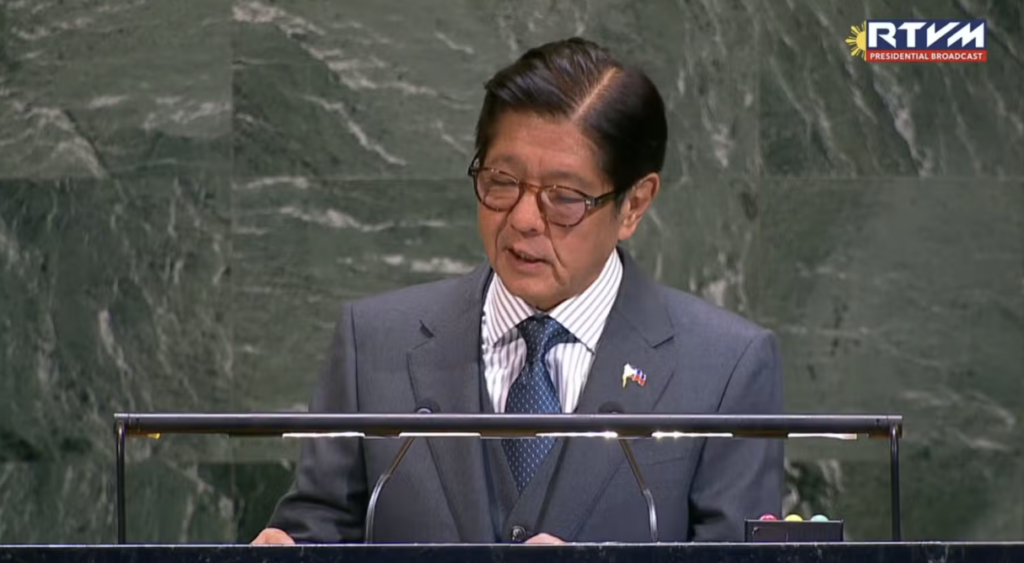
MANILA, Philippines — President Ferdinand Marcos Jr. has announced that the Philippine government is actively approaching non-traditional energy partners to secure the country’s fuel supply as escalating conflict in the Middle East threatens global market stability.
Speaking to reporters in New York, the President emphasized that while current domestic inventory remains in “good shape,” the “volatility” and unpredictable duration of the Middle East crisis necessitate a shift in procurement strategy. “We are talking to many other countries whom we normally do not buy oil from, but hopefully, we will be able to come to an agreement with them and that we will get further supply from them,” Marcos stated.
Data from the Department of Energy (DOE) highlights the urgency of this diversification, as roughly 98 percent of the Philippines’ crude oil imports currently originate from the Middle East. While 97 percent of refined petroleum products like diesel and gasoline are sourced from Asian neighbors, the underlying crude still largely depends on Middle Eastern production.
In tandem with these diplomatic efforts, the President confirmed he will certify as urgent a bill granting him emergency powers to reduce or suspend fuel excise taxes. Under the proposed measure, these powers could be triggered if the average price of oil breaches $80 per barrel for one month. The President noted that while global prices recently touched $100 per barrel, they have eased slightly to below $90, providing a small window to organize subsidies and support for affected sectors.
To further bolster domestic reserves, the Philippine National Oil Co. (PNOC) is exploring the acquisition of an additional 1 million barrels of diesel—enough to cover five days of national consumption. Potential sources for this emergency procurement include South Korea, Japan, Singapore, Malaysia, and Indonesia, with the United States and Canada also being considered as longer-term alternatives.