MANILA, Philippines — Economic Planning Secretary Arsenio Balisacan warned that the ongoing conflict in the Middle East could derail the Philippines’ 2026 economic growth targets, potentially keeping Gross Domestic Product (GDP) growth below 5 percent for a second consecutive year.
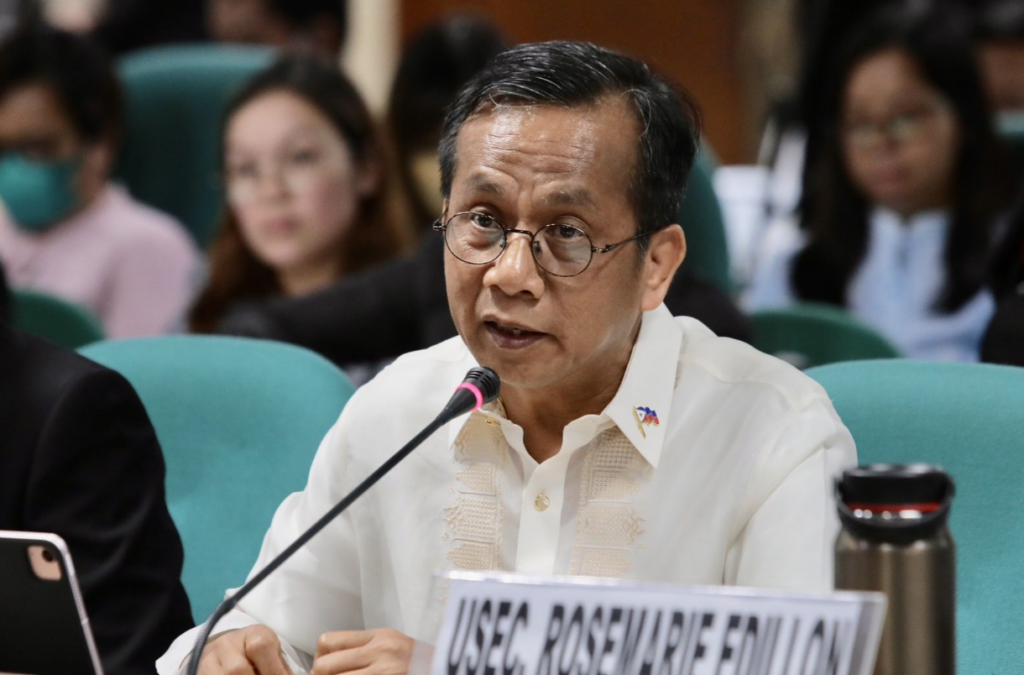
The Department of Economy, Planning and Development (DEPDev) presented two stress-test scenarios to the House of Representatives. Under “Scenario One” ($100/barrel oil through May), GDP could be reduced by 0.2 percentage points. Under the more severe “Scenario Two” ($140/barrel oil in March), growth could be shaved by 0.3 percentage points, pushing the lower end of the 5-6% target range toward 4.7%.
Primary Economic Risks:
- Inflation Surge: Inflation is projected to hit 4.2% to 4.8% in 2026, well above the government’s 2-4% target range. This is driven by high fuel costs being passed through to production and services.
- Remittance Shortfall: A potential deployment ban and mass repatriation of OFWs could see remittances drop by up to 65.3% compared to 2025, a loss of roughly ₱231 billion.
- Household Consumption: As a net oil importer with an economy heavily reliant on domestic spending, the Philippines is uniquely vulnerable to the combined impact of high prices and lower family incomes.
To mitigate the fallout, DEPDev is now recommending a full suspension of excise taxes on fuel, a shift from earlier proposals to merely reduce rates. While this move could cost the government between ₱43.3 billion and ₱105.9 billion in lost revenue, it is seen as essential to prevent double-digit price hikes for diesel and gasoline.
Despite the headwinds, Balisacan noted that the government is maintaining its official growth target for now, pending first-quarter data in May. However, he acknowledged that if the conflict persists for several months, the Philippines could emerge as one of Asia’s primary economic losers due to its “sluggish recovery” from last year’s 4.4% growth rate.