
PARIS, France — The world economy is bracing for a structural shock as the conflict between the United States, Israel, and Iran escalates, sending ripples through global commodity markets, supply chains, and financial systems. With the Strait of Hormuz—often called the world’s “jugular”—functionally impaired, the economic “price tag” of the war is radiating far beyond the Gulf, threatening to derail the recovery of oil-importing nations and reshape geopolitical alignments for years to come.
Analysts describe the current situation as a “cascading fallout.” While the initial shock was felt in energy prices, the secondary and tertiary effects are now hitting food security, industrial manufacturing, and international transport. The disruption of a waterway that carries 20% of the world’s oil and a fifth of its liquefied natural gas (LNG) has created an interlocking web of economic crises.
“This is not just a regional crisis; it is a structural shock delivered at a moment of extreme geoeconomic fragility,” a report from a leading global economic forum stated. “The longer this runs, the more lasting the damage becomes to everything from semiconductor production in Asia to farming in South America.”
The fallout is manifesting across several critical sectors:
- Energy Markets: Brent crude prices have surged toward the $120-per-barrel mark, with worst-case scenarios predicting a climb to $150 if the blockade of the Strait of Hormuz persists.
- Shipping and Insurance: War-risk premiums have been repriced or canceled entirely for certain routes, leading to a global surcharge on all sea-borne cargo, including non-energy goods.
- Aviation and Logistics: Major Gulf airlines, which serve as global hubs for passenger and freight transport, have faced thousands of flight cancellations and airspace closures, severing a primary link between Europe and Asia.
- Food and Fertilizer: The Gulf is a major producer of fertilizers and chemical products; disruptions here are expected to drive up global food inflation as farmers face higher input and transport costs.
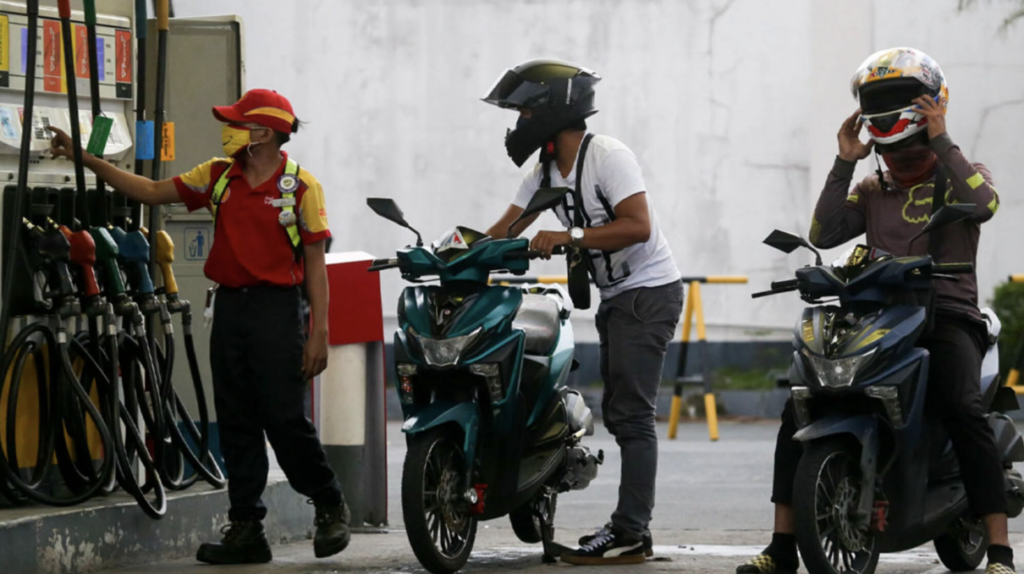
In the Philippines, the impact is particularly acute. Economic planning officials have warned that the war could shave significant percentage points off the country’s GDP growth target. The “double whammy” of skyrocketing fuel prices and a depreciating peso has pushed the government to consider emergency measures, such as the suspension of fuel excise taxes, to prevent a domestic cost-of-living collapse.
Furthermore, the threat of cyber-warfare has loomed over the corporate world. Iranian-linked hacking groups have already claimed responsibility for large-scale data breaches against Western medical and tech firms, while threats have been issued against the regional offices of global giants like Amazon, Google, and Microsoft.
As central banks worldwide prepare for key meetings to address this new inflationary surge, the consensus among economists is clear: the global economy’s “margin for error” has vanished. The path forward depends on the duration of the conflict and whether a “war of attrition” will permanently alter the cost of global trade.