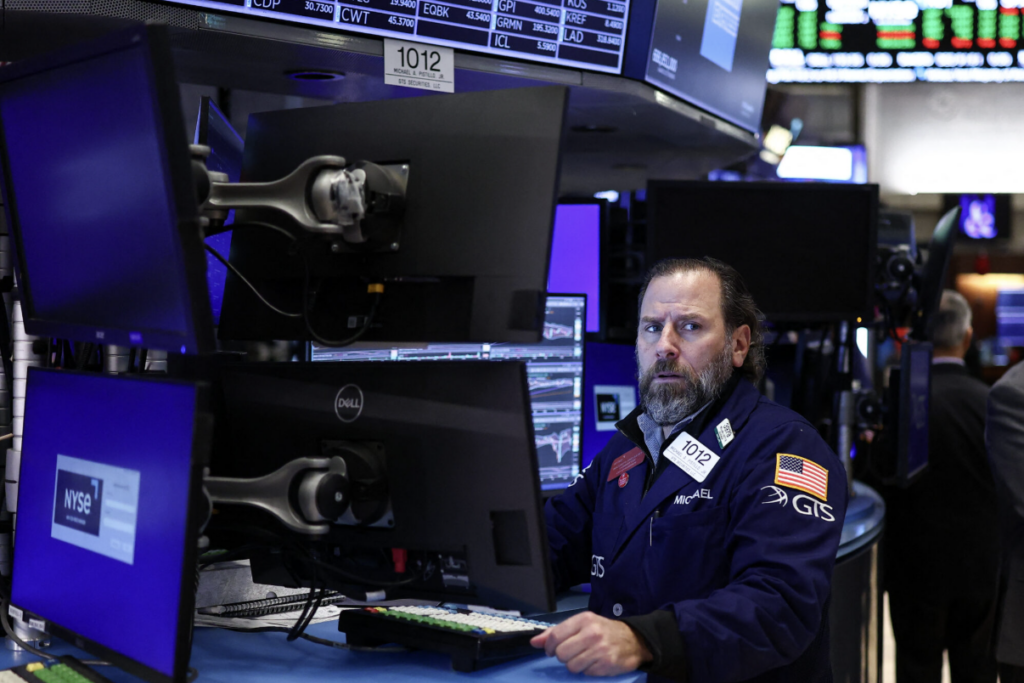
NEW YORK / LONDON — Global equity markets showed remarkable resilience this week as major US and European stock indices trended upward, defying the traditional inverse correlation with surging energy costs. Despite a fresh spike in global oil prices driven by geopolitical instability in the Middle East, investors appeared to focus on robust corporate earnings reports and cooling inflation data in non-energy sectors, suggesting a “decoupling” of stock performance from crude oil volatility.
On Wall Street, the S&P 500 and the Nasdaq Composite saw modest gains, led by a rally in technology and healthcare stocks. In Europe, the STOXX 600 also closed higher, bolstered by strong performance in the banking and luxury goods sectors. Market analysts noted that while high energy prices typically act as a “tax” on consumers and corporations, the current market sentiment is being driven by a belief that central banks are nearing the end of their interest rate hike cycles.
“The markets are currently operating on a ‘glass-half-full’ mentality,” a senior equity strategist noted. “While $100+ oil is a headwind, it is being offset by a labor market that remains strong and a corporate sector that has proven it can maintain margins through efficiency gains and pricing power. We are seeing a shift in focus from ‘inflation fear’ to ‘growth resilience.’”
The market rally was supported by several key factors:
- Strong Tech Earnings: Leading AI and semiconductor firms reported better-than-expected quarterly results, providing a massive boost to investor confidence in the “digital transformation” trade.
- Banking Sector Stability: European banks reported healthy net interest margins, reassuring investors that the financial system remains robust despite higher borrowing costs.
- Defensive Rotation: Investors are increasingly moving capital into “defensive” sectors—such as utilities and healthcare—which are less sensitive to the immediate impact of energy price fluctuations.
- Speculative Energy Hedging: Large institutional investors have already “priced in” much of the geopolitical risk, leading to less panic-selling when oil prices experience minor daily jumps.
However, economists warn that the rally may face a “ceiling” if oil prices remain elevated for an extended period. Sustained high energy costs eventually bleed into transport and manufacturing, which could trigger a secondary wave of core inflation. This would put central banks like the Federal Reserve and the European Central Bank (ECB) in a difficult position, potentially forcing them to keep interest rates “higher for longer.”
In Asia, markets showed a more mixed reaction, as heavy energy importers in the region remained more sensitive to the rising cost of dollar-denominated crude. Analysts are keeping a close watch on upcoming manufacturing data from China and the Eurozone to see if the stock market’s optimism aligns with real-world industrial output.
As the trading week concludes, the “bull-bear” debate continues: is this a sustainable recovery driven by a new economic paradigm, or a “bear market rally” that will eventually be corrected by the gravity of high energy costs? For now, the bulls remain in control of the narrative.