
MANILA, Philippines — The era of securing massive international funding based solely on ambitious climate pledges is drawing to a close in Southeast Asia. International investors are radically shifting their approach, favoring concrete commercial viability over generic sustainability promises.
The report, drawing from “Southeast Asia’s Green Economy Report 2026: The New Calculus”—a joint study published by Bain & Company and Standard Chartered Bank—warns that billions of dollars in planned green infrastructure are stalling across the region.
While Southeast Asia has the structural potential to attract up to $540 billion in green capital expenditures (capex) through 2030, a massive portion of that funding is now at risk.
                       [ SOUTHEAST ASIA GREEN CAPEX FORECAST ]
                                          │
         ┌────────────────────────────────┴────────────────────────────────┐
         ▼                                                                 ▼
   [ REALIZABLE CAPITAL ]                                            [ CAPITAL AT RISK ]
   • **$315 Billion** is projected to materialize under current      • **$225 Billion** in potential green investments is currently
     market conditions.                                                stalling or at risk of cancellation.
Financial institutions are strictly prioritizing projects where commercial demand, energy security, and infrastructure-ready policy intersect. If any of these three pillars are missing, capital stops flowing—even if a country boasts highly ambitious national decarbonization targets.
Between 2021 and 2025, annual green capex across the Association of Southeast Asian Nations (ASEAN) averaged roughly $40 billion. However, this money was heavily concentrated, creating a severe investment imbalance:
[Annual $40B ASEAN Green Capital] ──► 80% Heavily Funneled Into Just Two Segments:
                                                 │
                                                 ▼ (The Proven Sectors)
[Power & Transmission Grid Enhancements] ◄── Combined with Electric Vehicle (EV) Value Chains
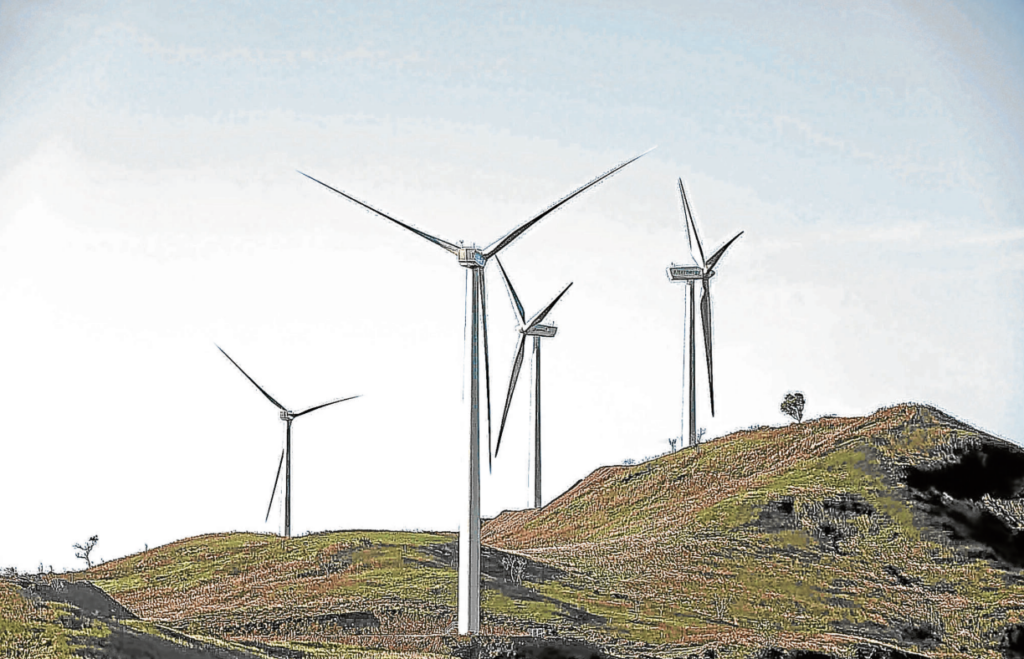
Because investor capital is demanding proven returns, less-developed green sectors are starved of funding. Consequently, between 50% and 60% of all renewable energy projects in Vietnam, Thailand, and Indonesia were canceled over the last five years, primarily due to grid-integration limitations, delayed permitting, and unpredictable policy environments. Paradoxically, while power demand continues to skyrocket, regional investments in transmission and distribution networks actually dipped by 3% over the past decade.
The report emphasizes that the Philippines faces an uphill battle to keep pace with its regional peers, highlighting a critical structural gap in its climate strategy:
- The Power Mix Reality: The private sector has aggressively deployed solar and wind assets to meet the state’s target of a 35% renewable energy mix by 2030. However, clean energy currently accounts for only 22% to 25% of the country’s power infrastructure, leaving the grid heavily dependent on coal generation (which commands over 60% of the mix).
- The Net-Zero Deficit: Unlike its neighboring ASEAN nations, the Philippines still has no official “net-zero” greenhouse gas emission target date, creating a layer of policy uncertainty for long-term international carbon-offset funds.
                                [ THE PHILIPPINE STRATEGIC GAP ]
                                                │
         ┌──────────────────────────────────────┴──────────────────────────────────────┐
         ▼                                                                             ▼
   [ EMISSION COMMITMENTS ]                                                      [ CAPEX REQUIREMENT ]
   • Complying with a pledge to slash greenhouse gas emissions                    • The state requires an estimated **$72 billion**
     by 75% over the next five years.                                              in sustained financing to upgrade its grid.
Regional financial leaders note that Southeast Asian nations have a narrow 24- to 36-month window to correct their regulatory frameworks and modernize their physical grids. As green capital becomes increasingly selective, the countries that successfully coordinate policy, streamline infrastructure approvals, and de-risk investments will capture the bulk of international funding, while those lagging behind will see their sustainable energy transitions left in limbo.