
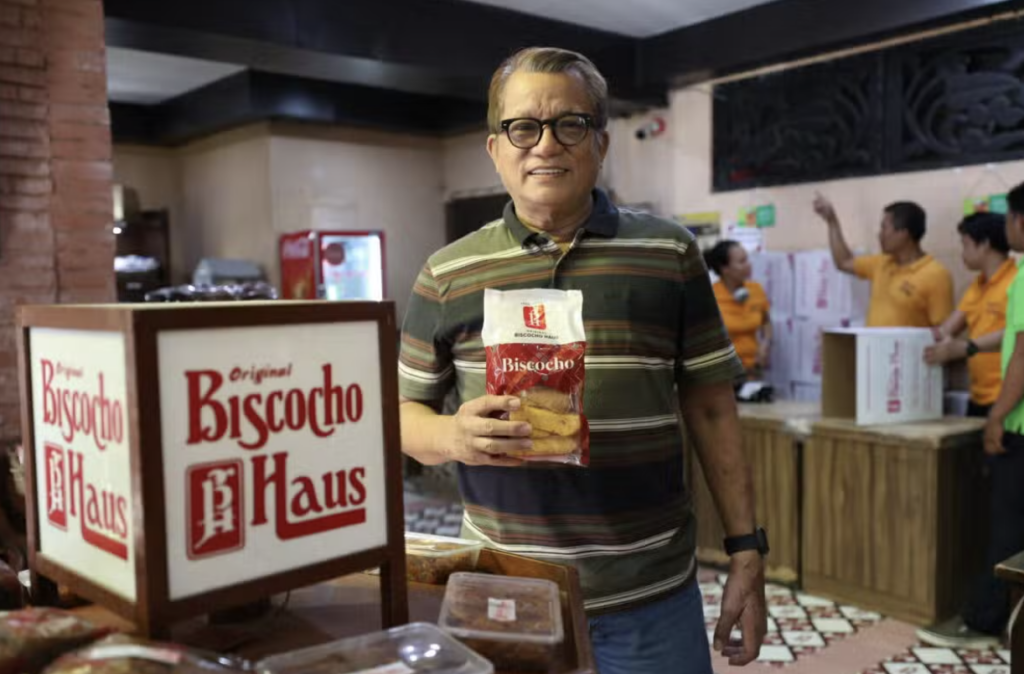
ILOILO CITY, Philippines — In the landscape of Philippine culinary heritage, few names carry the weight of sweet nostalgia quite like Ww. Original Biscocho Haus. The iconic Ilonggo brand is celebrating over half a century of culinary success. What began as an experimental home kitchen operation in 1975 has evolved into a multi-generational snack empire, serving as a pillar of Western Visayas’ pasalubong (souvenir gift) economy.
The brand’s enduring success showcases how a family-run business can achieve nationwide scale by preserving its original, labor-intensive baking standards.
The cornerstone of the business model is its flagship product—biscocho—a twice-baked, butter-brushed crunchy bread slice that has become synonymous with Iloilo’s identity.
The business trajectory highlights a slow, calculated expansion that prioritizing quality control over rapid commercialization:
                  [ THE 51-YEAR BAKING REVOLUTION ]
                                  │
                                  ▼
[ 1975: The Cottage Cradle ] ──► Founded by Dr. Carlos Guadarrama and his wife, Juana Jalandoni-Guadarrama,
                                 baking small batches out of their residential kitchen in Jaro, Iloilo City.
                                 │
                                 ▼
[ The Original Twist ]       ──► Instead of using stale, leftover loaves like traditional bakeries, Juana formulated
                                 a unique recipe using fresh, purposefully baked specialty bread rolls.
                                 │
                                 ▼
[ Modern Retail Footprint ]  ──► The brand now operates dozens of highly strategic branches across Western Visayas,
                                 handling massive corporate logistics pipelines without losing its home-baked appeal.
While the signature butter-coated crunch remain the prime revenue driver, the company has diversified its product catalog into modern, high-visibility packaging to appeal to contemporary travelers.
This diversified product matrix ensures steady year-round sales across its retail network:
- The Signature Cracker Base: The classic twice-baked crunch, prepared using a closely guarded, thick spread of premium butter and sugar.
- The Piaya Pipeline: Flat, unleavened flatbreads stuffed with rich, dark muscovado sugar or purple yam (ube), grilled to order at central transportation terminals.
- The Delicate Hand-Rolls: Crisp, paper-thin wafer tubes (barquillos) and light, star-shaped egg crackers (galletas) crafted using specialized regional molds.
The transition of leadership from the pioneering founders down to the second and third generations of the Guadarrama-Jalandoni family offers a textbook case study in brand longevity.
| Corporate Survival Pillar | Tactical Business Implementation | Long-Term Strategic Value |
| No In-Line Substitution | Rejects cheaper industrial baking substitutes or artificial texturizers to lower operational expenses. | Guarantees that the flavor and texture profile remains identical to what consumers fell in love with decades ago. |
| Gateway Logistics | Positions major retail outlets directly inside regional airports, seaports, and lifestyle malls. | Optimizes impulse buying behavior from departing business professionals, domestic tourists, and overseas workers. |
| Micro-Supply Integration | Sources primary materials—including native muscovado sugar and fresh flour lines—from Western Visayas farmers. | Insulates the company’s manufacturing floor from unpredictable global supply delays while boosting the local agricultural economy. |
The brand’s gold standard status is anchored in its refusal to cut corners for short-term profit. As the Philippine travel sector hits new post-pandemic milestones and tourism rebounds across Panay Island, the company continues to outpace mass-produced corporate snack brands. By blending a strict respect for tradition with savvy modern distribution tactics, Biscocho Haus proves that authenticity is the ultimate competitive advantage—ensuring that for millions of travelers, a trip to Iloilo is never truly complete without bringing home that familiar, golden-baked crunch.