
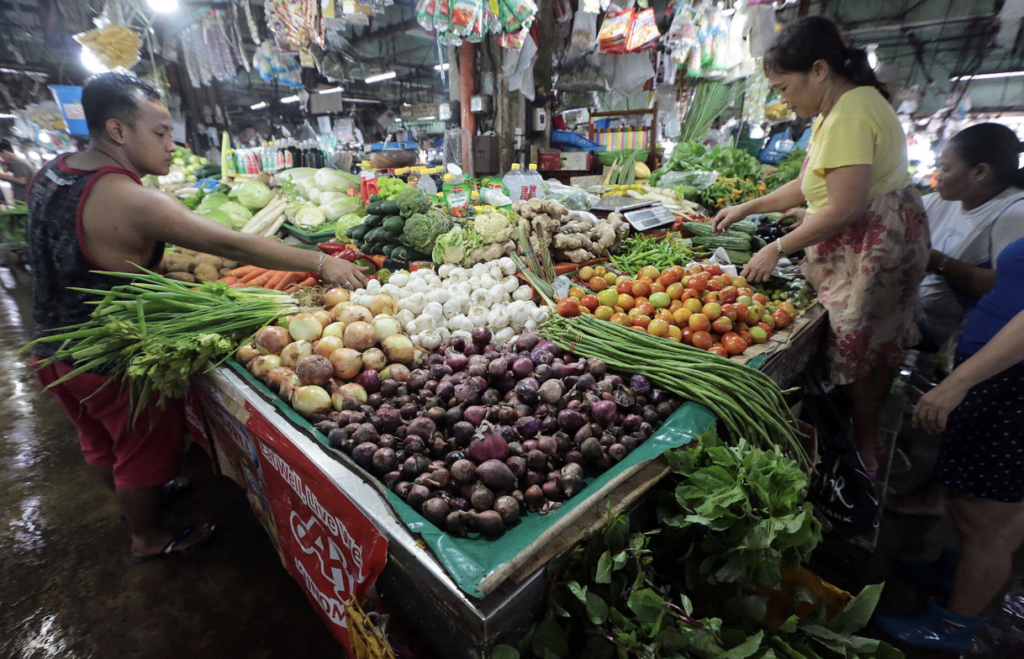
MANILA, Philippines — Compounded by severe climate warnings and tight fiscal boundaries, the Philippines has been flagged as one of the most vulnerable nations on Earth to a sustained increase in global food costs. An updated global assessment highlights the country’s structural exposure to food price shocks, threatening to de-anchor local inflation expectations.
The dynamic is driven heavily by a combination of high household food expenditure, reliance on net agricultural imports, and a looming weather disruption later this year.
In its updated global briefing, Nomura Global Markets Research ranked the Philippines 21st out of 110 countries in its Food Vulnerability Index, placing it firmly within the top 50 most exposed economies alongside large developing markets like Bangladesh, Nigeria, Egypt, and Vietnam.
The index assigns the Philippines a high vulnerability score of 100.7, rooted in three specific macroeconomic baselines:
- High Household Expenditure Share: Food and non-alcoholic beverages represent 37.3 to 37.75 percent of the average Filipino family’s total consumption basket—giving food prices an outsized role in shaping public inflation sentiment.
- Import Reliance: The country’s net food imports sit at an equivalent of 2.7 percent of national GDP, exposing local consumer markets directly to global supply chain distortions.
- Low Per-Capita Income Buffer: Nomura logged the country’s GDP per capita at $4,270, indicating that ordinary households lack the financial elasticity to easily absorb a sustained grocery price hike without sacrificing other essential needs.
The vulnerability warning lands at a critical juncture, as the state actively struggles to contain overlapping local and global headwinds:
- The El Niño Alert: The Philippine Atmospheric, Geophysical and Astronomical Services Administration (PAGASA) has officially raised its ENSO alert status to an active El Niño Alert, indicating a 79 percent probability that severe dry conditions will emerge between June and August 2026 and stretch directly into early 2027. Historically, severe El Niño episodes shave up to 12 percent off national domestic rice yields.
- Existing Inflation Breaches: Powered by an ongoing energy crisis and elevated global fuel costs, headline inflation quickened to a multi-year high of 7.2 percent in April, breaching the central bank’s comfortable 2-to-4 percent target corridor for the second consecutive month. Rice prices alone shot up 13.7 percent year-on-year in April.
Nomura warned that highly vulnerable economies entering a food price shock with already-strained fundamentals face narrowing policy choices. If a spike in food costs triggers capital flight or currency depreciation, central banks could be backed into a corner.
Reflecting this anxiety, Bangko Sentral ng Pilipinas (BSP) Deputy Governor Zeno Ronald R. Abenoja confirmed that the monetary board is tracking long-term inflation expectations over the next three years. If food and transport costs continue to drive public expectations upward, the central bank warned it may resort to “more drastic actions” to pull expectations back to the 3 percent target.
While market analysts note that a major rate hike could place additional strain on economic expansion—given that the first-quarter GDP printed a soft 2.8 percent growth rate—the BSP has affirmed it remains fully prepared to execute all necessary monetary tightenings to defend the stability of the local currency.