
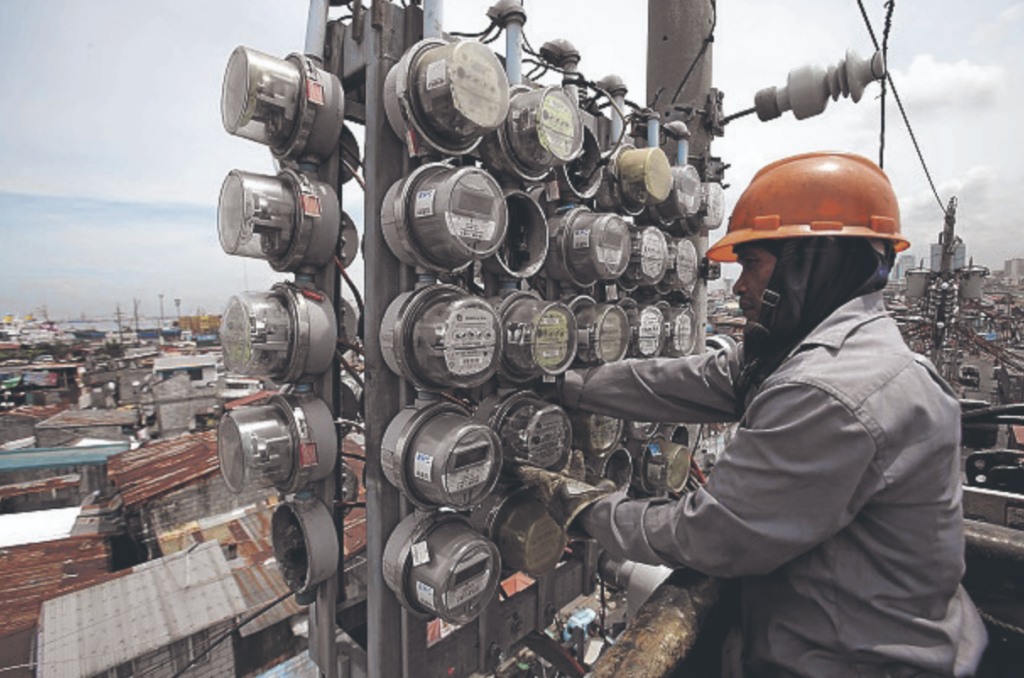
MANILA, Philippines — Compounding household financial burdens right at the onset of the wet monsoon cycle, energy distribution networks are officially passing along substantial generation cost increases to consumers. Manila Electric Co. (Meralco) announced that consumer electric bills will see a visible upward adjustment for the June billing cycle.
The increase stems from a combination of severe capacity strains across the Luzon grid in mid-May and a steadily weakening Philippine peso.
During a formal media briefing, Meralco Vice President and Head of Corporate Communications Joe Zaldarriaga outlined the exact financial impacts hitting the grid’s eight million consumers:
                        [ THE JUNE UTILITY RATE INCREMENT ]
                                         │
         ┌───────────────────────────────┴───────────────────────────────┐
         ▼                                                               ▼
   [ THE KILOWATT-HOUR TARIFF ]                                    [ TYPICAL CONSUMER IMPACT ]
 • **₱0.1488 Tariff Hike:** Rates are officially rising by         • **₱30 Extra Baseline Cost:** For households consuming an average
   **₱0.1488 per kilowatt-hour (kWh)** this month.                 • of **200 kWh**, bills will jump by roughly **₱30**.
 • **₱14.4833 Ceiling:** This adjustment bumps overall retail prices• **The May Residual Factor:** Officials warn that overall bills may
   up to **₱14.4833 per kWh**, climbing from May's ₱14.3345        • feel much higher due to intense air conditioner use during
   baseline.                                                      • late-May heatwaves.
The retail price surge is tied heavily to volatile wholesale market spikes and costlier international energy contracts:
[ RETREAT TO COCHING GENERATION VECTORS ]
                   │
                   ▼
[ The 27-Centavo Surcharge ]──► The underlying generation charge—which represents over half of a consumer's total
                                 bill—climbed directly by 27 centavos to hit **₱9.0704 per kWh**.
                                 │
                                ▼
[ WESM Spot Market Volatility]──► Spot prices spiked to **₱7.0281 per kWh** following a three-day string of rolling
                                 **red and yellow grid alerts** recorded between May 13 and May 15.
                                 │
                                 ▼
[ Forex and Fuel Pressures ] ──► Power Supply Agreement (PSA) costs rose by ₱0.0941 per kWh. A weak peso drove up
                                 costs for 54% of dollar-denominated supply deals alongside higher coal and LNG prices.
Because generation overheads dictate the shifting trajectory of household utility accounts, current price breakdowns emphasize macro-market pressures.
| Primary Rate Component | June 2026 Cost Baseline | Core Driver & Macroeconomic Factor |
| Generation Charge | ₱9.0704 per kWh | Up 27 centavos; heavily exposed to spot market volatility and rising international coal and LNG fuel costs. |
| WESM Spot Purchases | ₱7.0281 per kWh | Triggered by forced power plant outages and near-record peak demand during the mid-May grid squeeze. |
| Power Supply Agreements | Increased by ₱0.0941/kWh | Driven by the depreciation of the Philippine peso against the US dollar, directly impacting international supply contracts. |
“Here in Luzon, as we saw on May 13, 14, and 15, there was a series of red and yellow alerts, and that affected prices. That’s really how it works. When there is a supply constraint, it is reflected in the market. And when you buy from the market in that situation and condition, that usually redounds to a higher cost… Elevated consumption patterns observed in May are also a major factor that could drive higher power bills,” Meralco’s Joe Zaldarriaga clarified during the rate brief.
Meralco’s June tariff increase highlights the structural fragility of the Philippines’ power landscape. While a ₱30 hike for a typical 200 kWh household seems manageable on paper, it acts as a frustrating tip of the iceberg for consumer wallets. The real sting comes from the residual lag of late-May’s intense heat, which forced cooling appliances to run around the clock and locked in elevated consumption levels. Compounding this is our heavy reliance on external economic factors—such as imported coal and a weakening peso—meaning local consumers are constantly footing the bill for global market shifts. As legislative panels push to investigate the forced plant shutdowns that triggered May’s red alerts throughout 2026, energy regulators must fast-track domestic renewable generation to decouple local electricity bills from volatile international fossil fuel chains.