
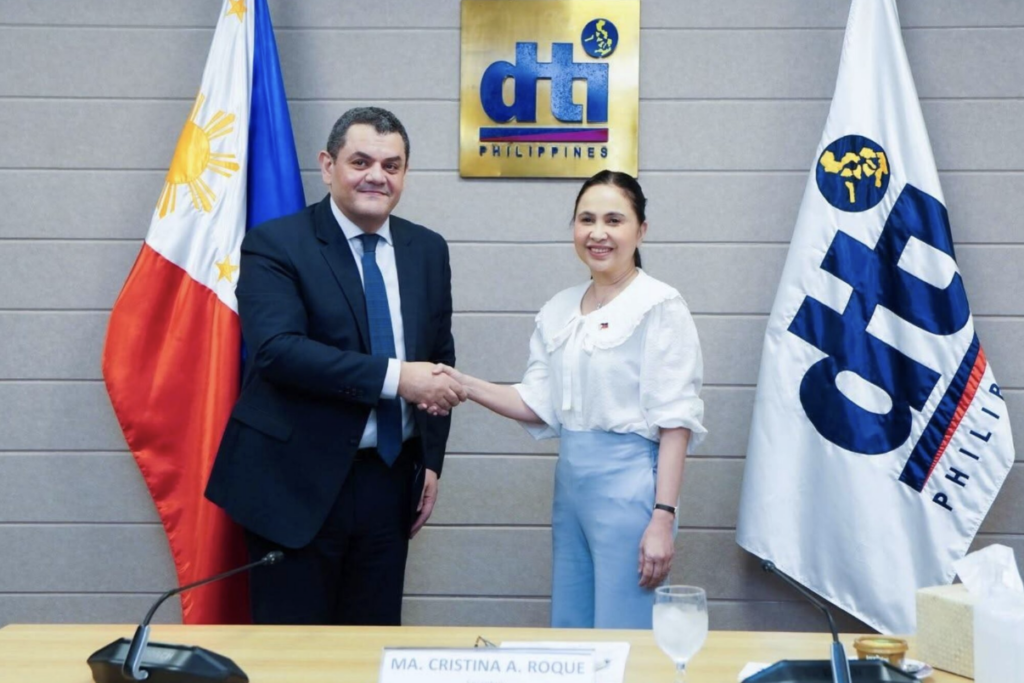
MANILA, Philippines — In a bid to spin new life into a historically modest bilateral trade relationship, the land of the Pharaohs is looking to bring its world-renowned textile expertise to Philippine shores. Egypt is actively exploring opportunities to establish local cotton fabric manufacturing facilities in the Philippines.
The initiative is aimed at introducing major Egyptian textile conglomerates to the Philippine domestic market, laying the groundwork for a decentralized supply chain for premium fabrics, bedsheets, and high-end garments.
The exploratory talks were unveiled by newly minted Trade Secretary Ma. Cristina Roque on Monday, following a high-level bilateral meeting with Egyptian Ambassador to the Philippines Nader Zaki. The primary strategy is to leverage the Philippines’ demographic weight as a strategic entry point for Egyptian businesses into the wider Southeast Asian trade corridors.
                        [ THE PH-EGYPT TEXTILE BRIDGE ]
                                       │
         ┌─────────────────────────────┴─────────────────────────────┐
         ▼                                                           ▼
   [ THE ASEAN MARKET GATEWAY ]                                [ THE TRADE MISSIOn BOOTSTRAP ]
 • **The Population Play:** Egypt is heavily drawn to the massive,  • **The Diplomatic Reshuffle:** The Department of Trade and Industry
   high-volume Philippine domestic consumer base.              • (DTI) is officially reviving a high-level business trade mission
 • **The DEFA Pipeline:** The integration timing is aligned    • to Cairo that was sidelined last year due to logistical issues.
   perfectly with the impending signing of the **ASEAN Digital • **The Foreign Visit:** Mirroring the move, Egyptian Foreign Minister
   Economy Framework Agreement (DEFA)** in November 2026, which • Badr Abdelatty is scheduled to land in Manila later this year to
   will unlock frictionless cross-border e-commerce networks.  • ink formal investment treaties.
The timing of Egypt’s manufacturing push coincides with an aggressive, state-backed expansion of its internal agricultural sector, which aims to leverage cheap local energy and manual harvesting pipelines to regain global dominance in high-grade long-staple cotton:
[ THE GIZA COTTON EXPANSION INDEX ]
                  │
                  ▼
[ Cultivation Surge ]      ──► Backed by liberalized state auction laws, Egypt's total cotton cultivation area
                              is projected to expand by **20 percent to 100,000 hectares through 2027**.
                              │
                             ▼
[ The Export Pivot ]       ──► While China and India remain the primary buyers of raw Egyptian cotton, Cairo is shifting
                              toward exporting **finished, value-added consumer textiles** to protect margins.
                              │
                              ▼
[ Middle East Footprint ]  ──► For Manila, partnering with Egypt allows the DTI to aggressively expand its trade presence
                              across the Middle East, building directly on the free trade agreement signed with the UAE earlier this year.
As the DTI explores reviving the domestic garments industry—supported by the agency’s recently launched specialized tax perk program for local weavers—the proposed trade axis outlines mutual operational zones.
| Trade Zone Arena | Underlying Economic Incentive | Planned Collaborative Framework |
| Suez Canal Economic Zone | Offers deep-water port access connecting European and Mediterranean consumer markets. | Ambassador Zaki invited Philippine electronics and food manufacturing firms to establish logistics hubs inside Egypt’s low-tariff special trade zones. |
| Philippine Economic Zones (PEZA) | Offers multi-year income tax holidays and duty-free import of specialized spinning machinery. | Targeted as the future home for Egyptian-backed fabric factories, utilizing imported raw Egyptian yarn to manufacture premium finished products locally. |
| The Nile Delta Grid | Home to the world’s finest growing conditions for long-staple cotton fibers due to stable humidity and year-round sun. | Will act as the primary raw material engine, shipping high-tensile yarn directly to Philippine processing lines. |
“They wanted to introduce us to some of the companies that are interested to explore. There’s nothing final yet, but we are actively exploring the feasibility of producing genuine Egyptian cotton fabrics directly here in the Philippines,” Trade Secretary Cristina Roque clarified, noting that home textiles and commercial hospitality linen contracts are the initial target markets.
The exploratory textile talks mark a practical step toward diversifying the Philippines’ trade partners, moving beyond its traditional heavy reliance on East Asian neighbors. By exploring a joint venture that brings Egypt’s legendary “white gold” to local factories, the DTI aims to revitalize a domestic garments industry that has long struggled against low-cost synthetic imports. Beyond manufacturing bedsheets, the broader plan to tie this alliance into the upcoming ASEAN DEFA framework ensures that future Philippine-made Egyptian cotton products can be shipped tariff-free across Southeast Asia. While a formal investment agreement is still pending, this diplomatic push signals that the Roque-led DTI is focused on transforming the Philippines from a simple importing consumer market into a highly capable, globally connected manufacturing hub.