
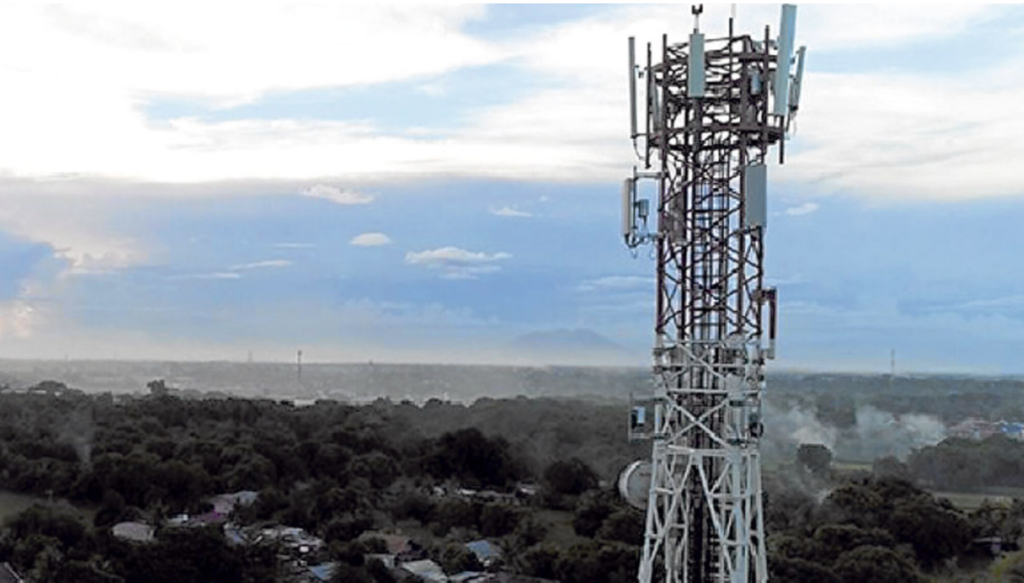
MANILA, Philippines — Moving swiftly to rebuild vital data and communication links following a devastating tectonic disaster, the country’s leading telecommunications providers have successfully re-established a baseline for local emergency communications. Globe Telecom Inc. announced that it has successfully restored network connectivity to 31 out of the 32 municipalities cut off by the massive earthquake in Southern Mindanao.
The rapid telecom deployment provides a critical operational lifeline to nearly 700,000 citizens navigating isolated rural districts.
The Ayala-led telecom firm has successfully brought its core cell infrastructure back online across multiple severely jolted provinces, hitting a 97% network restoration rate:
                         [ THE MINDANAO COMMUNICATIONS RESET ]
                                           │
         ┌─────────────────────────────────┴─────────────────────────────────┐
         ▼                                                                   ▼
   [ THE STABILIZED PROVINCES ]                                      [ THE CURRENT CONSTRAINT ]
 • **Full Service Enclaves:** Network services have been fully      • **Commercial Power Deficits:** While cell towers are mostly intact,
   restored across Zamboanga Sibugay, Zamboanga del Norte, South    • signal lines remain intermittent in localized rural pockets due to
   Cotabato, Maguindanao, Sultan Kudarat, and Sarangani.            • extensive, ongoing power outages.
 • **Emergency Power Use:** Impacted ground facilities are running   • **Local Energy Sync:** Field engineers are synchronizing grid
   on specialized battery backup units to stay online.             • repairs with local electric cooperatives for stability.
To ensure deep disaster zones do not drop completely off the grid while permanent ground stations recover, Globe executed a first-of-its-kind emergency technology rollout:
[ THE STARLINK CELL-TO-SATELLITE ROLLOUT ]
                    │
                    ▼
[ Direct-to-Mobile Link ]──► Utilizing an emergency National Telecommunications Commission (NTC) demo permit,
                             Globe rolled out its new **direct-to-device satellite-to-mobile connectivity**.
                             │
                            ▼
[ 30 Days Free Access ]  ──► Driven by Elon Musk's Starlink satellite network, over **700,000 Globe and TM users**
                             can access free SMS text and WhatsApp messaging without conventional tower access.
                             │
                             ▼
[ Ground Humanitarian Aid ]──► Parallel to the network rescue, Globe distributed initial relief packs to hard-hit communities
                             like Purok Balite, Barangay Lagao, in General Santos City via the Ayala Foundation.
Because communication lines dictate the logistics speed of search, rescue, and medical personnel, the country’s top telecom networks have launched parallel digital recovery operations.
| Telecom Corporate Group | Immediate Infrastructure Deployment | Localized Humanitarian Field Track in 2026 |
| Globe Telecom Inc. | 97% Ground Grid Restored; activated free Starlink direct-to-device satellite-to-mobile SMS and WhatsApp for 30 days. | Deployed emergency teams to provide free calls, device charging, and public Wi-Fi stations alongside relief packages. |
| PLDT / Smart Inc. | Deployed Starlink satellite internet terminals directly to major regional medical centers to sustain hospital operations. | Mobilized the PLDT-Smart Foundation to distribute food packs, hot meals, and clean drinking water to displaced families. |
“This initial deployment will show how satellite-to-mobile technology can provide communications support and strengthen network resilience during these times… We are grateful for the opportunity to support our kababayans in Mindanao,” Globe Telecom President and CEO Carl Cruz stated, highlighting the real-world value of satellite backups during a major natural disaster.
The rapid recovery of 97% of Globe’s network services shows how much local telecom groups have improved their disaster resilience over the years. During historical disasters, a magnitude-7.8 earthquake would usually leave affected provinces digitally blacked out for weeks, crippling rescue efforts and leaving families agonizing over missing relatives. The choice to launch a direct-to-device satellite service with Starlink right after the cell towers went down is a major step forward for emergency response. This means that even when localized power grids are completely dark, residents can still text for help. As telecom field crews work to fix the final remaining dead zones throughout 2026, this response proves that combining cell infrastructure with a backup satellite system is the new gold standard for protecting communities during a crisis.