
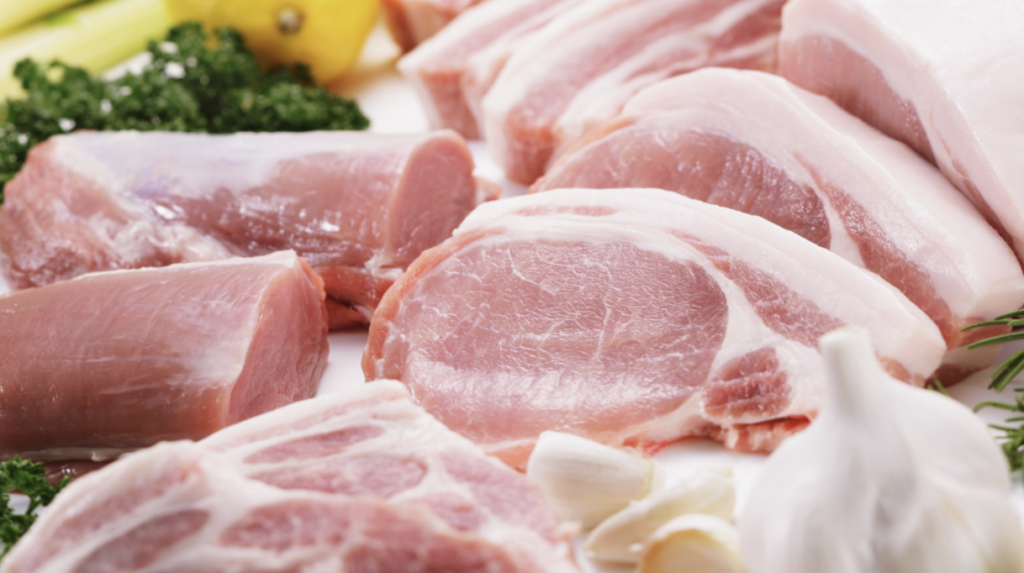
MANILA, Philippines — Warning that recent state policy updates risk upending historically stable market mechanics, private agricultural stakeholders are pushing back against systemic trade restructuring. The Meat Importers and Traders Association (MITA) has formally petitioned the Marcos administration to restore the country’s previous pork import allocation structure.
The traders warn that sudden changes to import parameters threaten private industry investments and could heavily destabilize essential retail supply chains.
The private sector’s grievance centers on a two-pronged government effort launched over the past quarter to aggressively counter retail inflation and domestic pork shortfalls:
                        [ THE 2026 PORK IMPORT REGULATORY ADJUSTMENTS ]
                                               │
         ┌─────────────────────────────────────┴─────────────────────────────────────┐
         ▼                                                                           ▼
   [ THE REDISTRIBUTION POLICY ]                                             [ THE VOLUME EXPLOSION ]
 • **Joint Department Circular No. 1:** Approved on **March 31, 2026**,• **Executive Order No. 116:** Signed into law on
   state bureaus overhauled the Minimum Access Volume (MAV) system,• **May 19, 2026**, this directive ballooned the active
   canceling all previous historical allotments.                   • pork MAV threshold from **54,210 metric tons (MT)**
 • **The Pooled Consolidation:** The circular swept all remaining  • straight to **204,210 MT** to fill severe local supply gaps.
   quotas into a single, centralized pool to create a supposedly   • **The Underlying Catalyst:** Continuous devastation from
   "equitable" playing field for incoming traders.                 • African Swine Fever (ASF) has decimated domestic hog stocks.
In a formal, urgent appeal submitted directly to President Ferdinand Marcos Jr., MITA President Emeritus Jesus Cham outlined deep structural flaws built into the pooled allocation method:
[ THE PRIVATE TRADER DISRUPTION MATRIX ]
                      │
                      ▼
[ Erasing Historical Quotas ]──► The pooled redistribution framework completely eliminates the dependable,
                                 regular year-on-year volume shares that legal operators built their business plans upon.
                                 │
                                ▼
[ State-Sponsored Monopoly ] ──► EO 116 mandates that **120,000 MT** (nearly 60% of the entire quota) go straight to state-run networks,
                                 specifically the Food Terminal Inc. (FTI) and the *Kadiwa ng Pangulo* program.
                                 │
                                 ▼
[ Unfair Competition Fields ]──► Private traders argue that because State Trading Enterprises already possess natural
                                 duty-free import privileges, feeding them MAV allocations introduces heavy, artificial market friction.
As the Department of Agriculture scrambles to buffer consumer tables against food inflation, diverse local and international groups are displaying entirely conflicting market strategies.
| Industry Sector / Trade Group | Baseline Stance on Current Import Policy | Core Economic Argument & Operational Impact |
| Meat Importers & Traders (MITA) | Strongly Opposes Pooled Quotas; demands a return to old historical distribution lines. | Argues government intervention creates unlevel competition, warning that discouraged traders will drop out and spark a retail domino effect. |
| National Federation of Hog Farmers | Strongly Opposes Tariff Reductions; slams the lack of agricultural sector consultation. | Argues that lowering tariffs to favor foreign shipments hurts local hog farmers fighting hard to recover from long-term ASF losses. |
| British Chamber of Commerce (BCC) | Strongly Supports the Higher Quota; backs the 204,210 MT expansion target. | Believes the expanded cap is a necessary step to secure baseline national food security while expanding agricultural trade with the UK. |
“The government seems to want to take over the pork import trade. FTI or other State Trading Enterprises do not need MAV since they can import duty-free. This creates unfair competition… This fosters a situation wherein the private sector cannot compete. Many traders and importers, already dismayed, will likely drop out of the market, creating a domino effect across the supply chain that ultimately harms restaurants, supermarkets, and wet markets,” Jesus Cham emphasized, urging the state to immediately host broader, inclusive joint consultations.
The escalating friction between private meat importers and state policymakers highlights the delicate balance required when managing food supply logistics. In an effort to keep food prices affordable amid ongoing African Swine Fever shortfalls, the government’s decision to flood the market with imports and centralize allocations under state programs makes sense on paper. However, by removing the predictable, decades-old quota system and prioritizing state entities like FTI and Kadiwa, the policy inadvertently risks sidelining the very private infrastructure required to move food efficiently across the country. If private traders stop making large-scale import orders out of financial frustration, the resulting logistical gap could end up causing the exact supply shocks and price spikes the state is trying to avoid. As economic teams navigate these conflicting interests throughout 2026, finding a compromise that protects local hog raisers, supports private logistics, and shields everyday consumers remains incredibly difficult.