
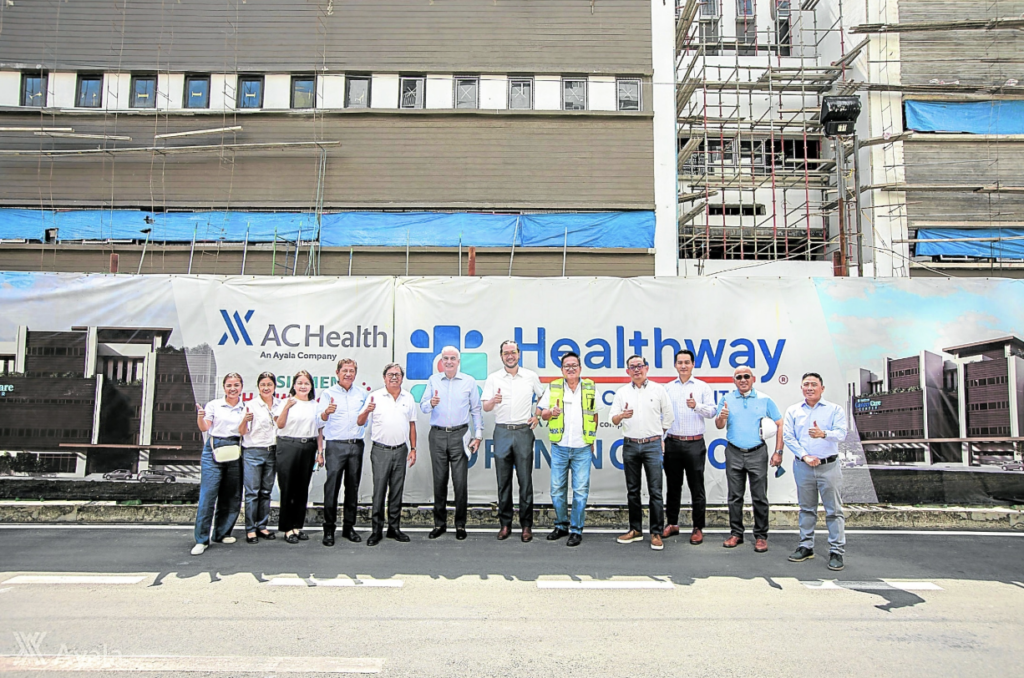
MANILA, Philippines — Shifting the conversation away from traditional concrete-and-steel development, a major framework for the country’s national growth has been laid out. Business leaders are championing an intentional alignment of private resources and public policy toward social infrastructure—the interconnected networks of private education, healthcare, livelihood development, and environmental sustainability.
The core argument asserts that while physical roads and airports drive connectivity, social infrastructure acts as the ultimate engine that empowers human capital to function efficiently at scale.
The commentary highlights a powerful development formula frequently emphasized by Ayala Corporation Chair Jaime Augusto Zobel de Ayala (JAZA): getting healthcare, education, and livelihood right to build a resilient national foundation.
                       [ HUMAN CAPITAL: THE SOCIAL INFRASTRUCTURE EQUATION ]
                                                 │
         ┌───────────────────────────────────────┴───────────────────────────────────────┐
         ▼                                                                               ▼
   [ HEALTHCARE CAPACITY ]                                                         [ EDUCATIONAL SCALE ]
 • **AC Health & Generika:** Bringing affordable generics, primary    • **iPeople Network:** A strategic joint-venture with the
   care clinics, and decentralized medical access closer to grassroots • Yuchengco Group that absorbs over **80,000 active students**.
   provincial communities.                                             • **Avenue for Growth:** Encompasses Mapúa schools, National
 • **Preventive Foundation:** Ensuring the workforce stays healthy and • Teachers College (NTC), APEC Schools, and the University
   resilient against localized health shocks.                          • of Nueva Caceres (UNC).
According to recent data from the World Bank Human Capital Report, human capital—the shared knowledge, health, and skill base of a populace—stands as a nation’s most valuable economic asset. The sectors are deeply intertwined, meaning an investment in one yields positive cascading effects across the others:
[ THE INTERCONNECTED PROGRESS PIPELINE ]
                   │
                   ▼
[ Better Health Outcomes ]    ──► Directly boost long-term educational retention, lowering classroom
                                  absenteeism and cognitive development delays.
                                  │
                                 ▼
[ Accessible Education ]      ──► Prepares a highly competitive, skilled labor pool capable of secure
                                  higher-paying livelihood opportunities.
                                  │
                                  ▼
[ Thriving Local Communities ]──► Created when these social foundations actively support households,
                                  workplaces, and public neighborhoods at scale.
A vital addition to the core growth equation is environmental resilience. The report highlights active partnerships with forward-thinking local government units (LGUs) implementing green infrastructure and clean energy platforms:
- Valenzuela City’s Green Transition: Shifted its localized municipal police patrol fleet over to electric vehicles (EVs) in collaboration with ACMobility.
- Makati City’s Clean Energy Sourcing: Sourced its city-wide grid electricity directly from renewable power installations through ACEN.
- Ayala Foundation Initiatives: Integrating community development and civic livelihood programs with intentional environmental preservation frameworks.
“While continued investment in physical infrastructure is important, we must invest just as intentionally in the social foundations that make thriving possible. Social infrastructure is the infrastructure that builds people—and, in turn, a stronger and more prosperous nation.”
Ultimately, corporate and state leaders urge a collective effort connecting national agencies, municipal governments, the academe, and non-government organizations (NGOs) to prioritize the human element. The true capacity of the Philippines will not be measured by the size of its skyscrapers, but by the strength, health, and readiness of its people.