
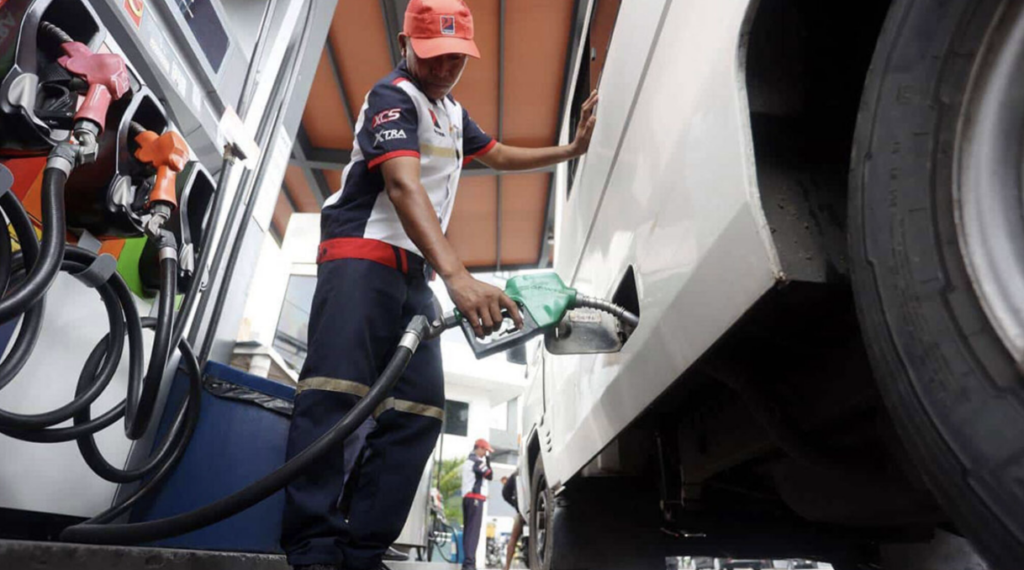
MANILA, Philippines — Following a week of aggressive, “big-time” price slashes across local pumps, motorists can expect a much more subdued relief cycle at the close of the month. Domestic petroleum prices are projected to decline anew next week, starting Tuesday, June 30, 2026, though the adjustments will be significantly smaller than previous double-digit cuts.
The impending price relaxation tracks shifting international market dynamics as temporary supply bottleneck anxieties across major maritime trading paths begin to cool off.
Initial calculations from industry sources tracking early weekly market movements indicate fractional downward movements across primary refined fuel lines.
The forecasted price trims are anticipated to hit local gas stations within the following parameters:
                          [ PROJECTED FUEL PRICE ADJUSTMENTS ]
                                           │
         ┌─────────────────────────────────┴─────────────────────────────────┐
         ▼                                                                   ▼
   [ AUTOMOTIVE DIESEL ]                                               [ GASOLINE GRADES ]
 • **Estimated Price Cut:** Anticipated to drop by **70 centavos     • **Estimated Price Cut:** Anticipated to drop by **50 centavos
   to ₱1.20 per liter**.                                               • to ₱1.50 per liter**.
 • **Market Context:** Follows a massive ₱9.04 to ₱11.04 price slash • **Market Context:** Follows a major ₱3.90 to ₱5.90 price cut
   enforced during the previous trading week.                          • enforced during the previous trading week.
Note: These baseline numbers are extracted from the first four trading sessions of the Mean of Platts Singapore (MOPS) and foreign exchange trends. Final pump pricing may subtly drift based on Friday’s final market close.
The steady downward movement in local pumps reflects an overall easing of pressure across international crude indices. Energy analysts credit the price stabilization to a combination of growing geopolitical diplomacy and a gradual return to normal supply chains:
[ THE GLOBAL OIL LOGISTICS TIMELINE ]
                    │
                    ▼
[ Peace Deal Talks ]──► Market volatility cooled following an interim peace pact negotiated between the US and Iran,
                        giving international energy traders a brief window of stability.
                        │
                       ▼
[ Hormuz Recovery ] ──► Physical maritime traffic through the vital **Strait of Hormuz** is steadily recovering, allowing
                        stalled Middle Eastern barrels back into the active global delivery pool.
                        │
                        ▼
[ Sanctions Waiver ]──► Prices are further weighed down by active sanctions waivers on Iranian crude, injecting highly needed
                        petroleum product volumes into the broad international market to curb lingering asset scarcity.
While next week’s anticipated rollbacks lack the dramatic shock value of the historic double-digit slashes seen on June 23, the consecutive price cuts are helping to lock in much-needed relief for transport groups and consumers. The Department of Energy (DOE) continue to monitor regional price movements under its flexible price-range guidelines, ensuring that distribution hubs comfortably pass on global trading discounts. By keeping pump costs manageable, the downward momentum helps lower logistical overhead across Luzon, Visayas, and Mindanao—anchoring baseline transport costs as businesses head into the third quarter of the fiscal year.