
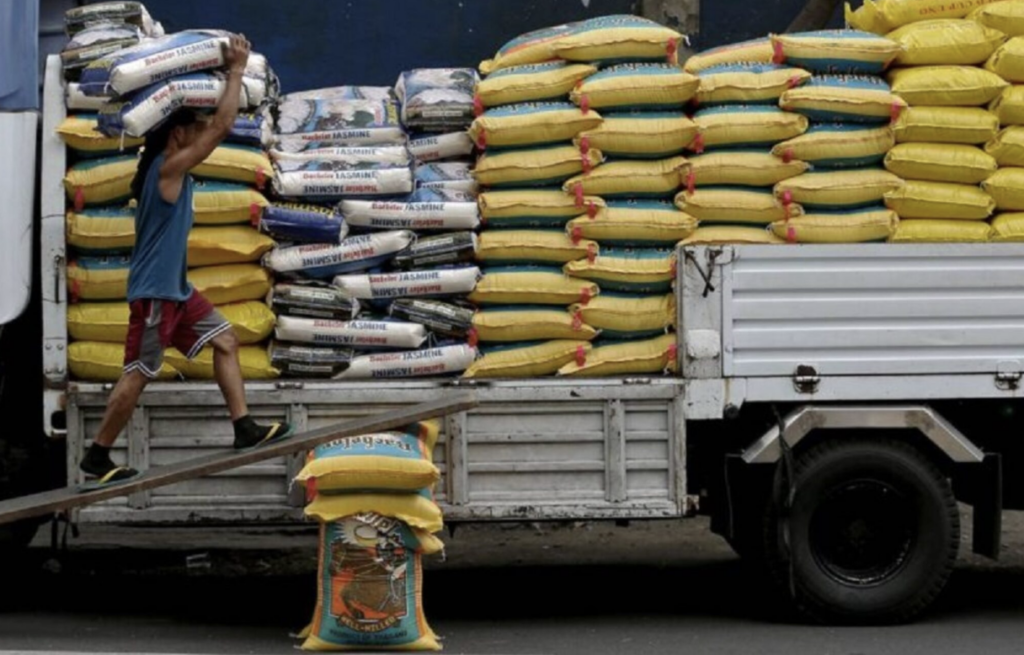
MANILA, Philippines — Driven by a combination of shrinking domestic harvests and relentless population growth, the Philippines is on track to scale up its reliance on foreign grain. Friday evening, June 26, 2026, the United States Department of Agriculture (USDA) has upgraded its forecast for local grain procurement, indicating that domestic demand will continue to comfortably outpace localized production.
The upward revision signals a compounding food security challenge as high input overhead and extreme climate patterns pinch local farmers.
In its updated Grain and Feed report compiled by the Foreign Agricultural Service (FAS), the USDA raised its projections for incoming grain shipments for the marketing year 2026–2027, which officially begins in July.
The structural mismatch between local supply and consumer demand reflects the following metric shifts:
                            [ THE PHILIPPINE RICE METRIC BALANCE ]
                                               │
         ┌─────────────────────────────────────┴─────────────────────────────────────┐
         ▼                                                                           ▼
   [ REVISED IMPORT TARGET ]                                                   [ CHRINKING DOMESTIC OUTPUT ]
 • **2% Forecast Expansion:** The USDA bumped its total import forecast• **Production Deficit:** The USDA-FAS trimmed its forecast for
   to **5.2 million metric tons (MT)**, up from the previous outlook • local milled rice down by 0.8 percent to **12.3 million MT**.
   of 5.1 million MT.                                                 • **Harvest Footprint:** The total physical land area dedicated to
 • **Active Influx:** Bureau of Plant Industry (BPI) records show that• rice farming is anticipated to shrink by 1.1 percent,
   traders have already pulled **2.42 million MT** into the country  • tightening down to **4.65 million hectares** nationwide.
   as of June 11.                                                     • **Demand Constant:** Meanwhile, domestic milled rice consumption
                                                                      • remains pinned at an immense **17.65 million MT**.
The projected drop in local crop yields stems from a painful combination of rising operating expenses for smallholder farmers and severe regional weather bottlenecks:
[ LOCAL RICE PRODUCTION RISK FACTOR SEQUENCE ]
                    │
                    ▼
[ Input Inflation ] ──► Farmer profitability is being choked off by high fuel and fertilizer prices. Local contacts
                        report that the price of urea—the standard fertilizer—surged **over 55 percent** this June compared to last year.
                        │
                       ▼
[ Price Margin Drop ]──► Farm-gate prices for both fancy and regular rice varieties fell sharply in April after a
                        steady rise since September 2025, damping farmer incentives to clear or expand new crop areas.
                        │
                        ▼
[ Dam Hypoxia ]     ──► Water levels at four critical lowland irrigation reservoirs have plunged far below normal high-water
                        marks due to weak rainfall, compounding a looming El Niño cycle that may stretch into early 2027.
To prevent runaway market inflation, the government enforced a ₱50 per kilogram price cap on imported rice alongside its price-indexed tariff mechanism in May. While the intervention successfully insulated household wallets from sudden price shocks, the USDA noted it acts as a double-edged sword. By jacking up landed overhead and narrowing profit margins, the cap has discouraged some private traders from bringing in extra volumes. Consequently, the supply gap left by anemic local production will be absorbed through a combination of targeted foreign imports and a gradual drawdown of existing national buffer stocks—requiring highly strategic logistical handling to keep local markets uniformly supplied.