
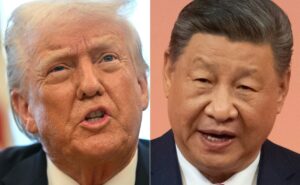
BEIJING – The China-US trade war is heating up as Beijing imposes retaliatory tariffs on US agricultural goods in response to President Donald Trump’s latest tariff hikes on Chinese imports.
Starting Monday, China will implement 10-15% tariffs on key US farm products, including:
🔻 Chicken, wheat, corn, and cotton (higher tariff rates)
🔻 Soybeans, sorghum, pork, beef, seafood, fruit, vegetables, and dairy (slightly lower rates)
Trump’s Aggressive Tariff Policy
Since returning to office in January 2025, Trump has launched a wave of tariffs on major trading partners, citing issues such as:
📌 Illegal immigration
📌 Fentanyl smuggling
📌 Trade imbalances
His administration first imposed a 10% blanket tariff on all Chinese goods in February, before raising it to 20% last week.
Economic Impact: A Strategic Battle
Experts say China’s retaliatory tariffs are meant to pressure Trump’s voter base while leaving room for negotiations.
Meanwhile, China’s economy is already grappling with:
📉 Slowing exports – Growth dropped to 2.3% in early 2025 (from 10.7% in December 2024).
🏡 Real estate debt crisis
👨🎓 High youth unemployment
What’s Next?
🔹 China’s Premier Li Qiang acknowledged a “complex and severe external environment” but maintained a 5% economic growth target for 2025.
🔹 Analysts warn that while government fiscal support may soften the blow, the trade war’s impact could hinder China’s recovery.
🔹 The US market turmoil continues, as businesses and investors struggle with uncertainty over Trump’s shifting trade policies.