
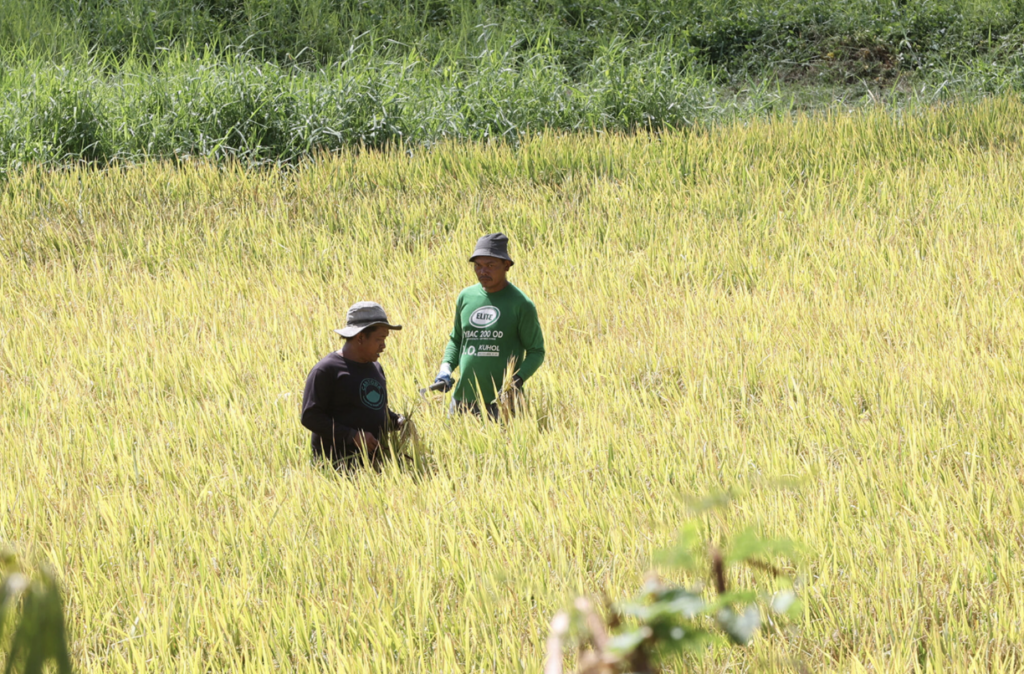
SINGAPORE — A volatile convergence of extreme weather patterns and geopolitical conflict in the Middle East is threatening food security across Asia. The dual impact of an impending El Niño climate phenomenon and skyrocketing fertilizer costs driven by the ongoing Iran war is projected to severely slash rice yields in the Philippines and across the region over the next two years.
The severe economic pressure is forcing some localized smallholders to apply less fertilizer or consider abandoning rice farming entirely.
Speaking on the sidelines of the Philanthropy Asia Summit 2026 in Singapore, Yvonne Pinto, Director General of the Philippines-based International Rice Research Institute (IRRI), detailed how the Middle East conflict has directly disrupted agricultural pipelines:
- The Price Surge: Domestic fertilizer prices have spiked by 33% globally since late February, following Iran’s defensive maneuvers to control the Strait of Hormuz in retaliation against a joint offensive by the United States and Israel.
- The Choke Point: Roughly one-third of the global supply of critical chemical raw materials required for fertilizer manufacturing passes directly through this maritime corridor.
- The Domestic Strain: Filipino rice farmers already operate at a structural disadvantage, spending an average of ₱60,000 per hectare to cultivate palay (paddy rice)—with labor consuming 30% of total costs. Fertilizer prices in the Philippines remain significantly higher than those in regional export heavyweights Vietnam and Thailand.
[Iran-US/Israel War (Feb 2026)] ──► Strait of Hormuz Blockade ──► Global Chemical Logistics Choked
                                                                           │
                                                                           ▼
[PH Rice Yield Drops (2027-2028)] ◄── Lower Fertilizer Input ◄── Price Spikes by 33%
Pinto warned that the cascading fallout of reduced fertilizer application will significantly degrade soil output, with the sharpest drops in production expected to fully manifest during the 2027–2028 harvest cycles.
Compounding the geopolitical fertilizer crisis is the looming onset of a severe El Niño cycle, characterized by extended, bone-dry conditions that are highly destructive to water-intensive rice agriculture:
                      [ PHILIPPINE HYDROLOGICAL DEFICIT ]
                                      │
       ┌──────────────────────────────┼──────────────────────────────┐
       ▼                              ▼                              ▼
 [ THE IRRIGATION GAP ]         [ THE PRODUCTION HIT ]         [ FORECAST DOWNGRADE ]
 • Only about **40 percent** of  • Rice sector models show      • The Department of Agriculture
   total domestic farmland is     El Niño could slash total      (DA) dropped its record target
   connected to active, stable    national output by up to       of 20.28 million MT down to
   irrigation networks.           **4 million metric tons**.     **19.87 million MT**.
The Department of Agriculture (DA) has formally abandoned its initial projection of hitting a record-high palay harvest of 20.28 million metric tons (MT) for the year. Prior to the escalation of the Middle East war, that baseline would have marked a 1.1% increase over the historic 20.06 million MT logged by the Philippine Statistics Authority in 2023.
Instead, the severe dual crisis has forced state economists to prepare for an aggressive pivot to foreign markets.
                           [ VOLATILITY IMPORT CASCADES ]
                                         │
        ┌────────────────────────────────┴────────────────────────────────┐
        ▼                                                                 ▼
  [ PLANTER FLIGHT ]                                              [ THE PRICE SPIRAL ]
  • High production costs threaten to drive marginal rice        • As domestic production shrinks, the state will be
    planters completely out of active agricultural work.            compelled to drastically scale up commercial imports.
  • Lowers the domestic self-sufficiency curve, leaving the       • Higher import dependence triggers domestic market
    national supply chain exposed to international factors.         volatility and raises retail rice prices for consumers.
To counter this trajectory, Pinto emphasized that the Philippines must immediately implement an integrated, high-tech response strategy. This includes fast-tracking the distribution of climate-resilient, drought-tolerant seed varieties, maximizing mechanized farming tools to reduce high labor costs, improving municipal water impounding infrastructure, and rolling out precise digital advisories.
By deploying smart digital data systems directly to farmers, the state can guide growers on exact fertilizer application rates and optimal planting windows, preserving precious input resources while striving to protect average farm yields from dropping below the current baseline of 4.1 to 4.2 MT per hectare.