
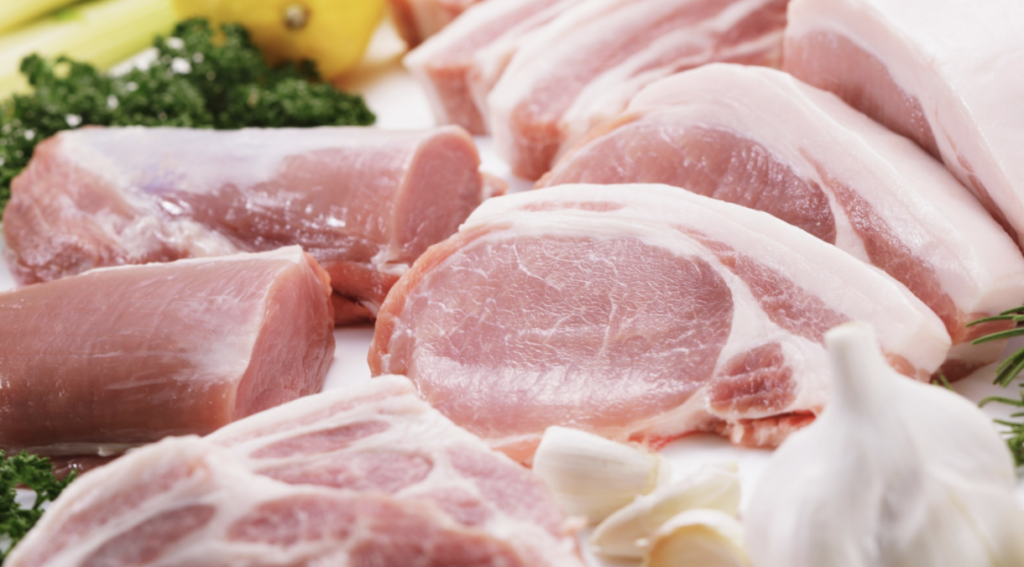
MANILA, Philippines — Providing a strong international vote of confidence for the state’s aggressive food-security policies, foreign business leaders have come out in full support of Malacañang’s latest market intervention. A prominent group of British businesses has backed the Marcos administration’s controversial decision to dramatically lift the restriction caps on lower-tariff meat entries.
The British Chamber of Commerce of the Philippines (BCCP) stated that expanding access pipelines is an essential tactical step to safeguard market volume while directly insulating local households from persistent food inflation.
The dynamic business response follows the formal signing of Executive Order No. 116 by Executive Secretary Ralph Recto, acting on authority of President Ferdinand Marcos Jr., which authorized a massive shift in importation rules:
[African Swine Fever Severe Production Losses] ──► Shrinks National Swine Inventory & Drives Up Prices
                                                               │
                                                               ▼ (May 19, 2026: Executive Order No. 116)
[Pork MAV Cap Expanded Almost Fourfold]              ◄── Raises Lower-Tariff Limit to 204,210 Metric Tons
                                                               │
                                                               ▼
                     [BCCP Backs Expansion to Drive UK-PH Bilateral Trade Ties]
Under the new directive, the government expanded the Minimum Access Volume (MAV)—a specialized framework introduced in 1996 that allows fixed quantities of specific agricultural products to enter domestic ports under drastically reduced tariff rates. To check a sweeping supply gap caused by years of chronic African Swine Fever (ASF) devastation, the order adds 150,000 metric tons (MT) annually for the next two years, instantly raising the baseline pork cap from 54,210 MT up to a massive 204,210 MT.
While international trade representatives look at the policy change as a net positive, the decision has split domestic stakeholders, setting up a clear policy debate over the long-term protection of the countryside:
                            [ POLICY STAKEHOLDER MATRIX ]
                                          │
         ┌────────────────────────────────┴────────────────────────────────┐
         ▼                                                                 ▼
   [ RECRUITMENT ADVOCATES ]                                         [ DOMESTIC PRODUCER PUSHBACK ]
   • **Agriculture Department View:** Secretary Francisco Tiu Laurel   • **Market Distortion Fears:** The Samahang Industriya ng
     Jr. noted that expanding lower-tariff volume creates aggressive     Agribisnes (SINAG) and the Pork Producers Federation
     competition, effectively forcing down bloated market prices.        warn that flooding the market will drop farmgate payouts.
   • **BCCP Endorsement:** "We believe that an increase in MAV volume   • **State Dominance Worries:** Industry leaders argue that the
     represents an important step toward food security," noted           EO’s rule designating **120,000 MT** explicitly for state-run
     BCCP Executive Vice Chair Chris Nelson.                             Kadiwa distribution creates completely unfair competition.
For British commercial networks, the expanded limits represent an excellent window to build out multi-market integration, providing real relief to local food processing plants that are currently starving for raw materials.
| UK-PH Agricultural Trade Metrics | Current First-Quarter Volumes | Targeted Policy Outcomes |
| Total British Meat Consignments | Bureau of Animal Industry (BAI) data logs 3,229 MT of total processed meats shipped to the PH in Jan-Feb 2026. | Ensures deep logistical supply chains to maintain processing plants at peak volume during local farm shortages. |
| Pork-Specific Shipments | Raw pork cuts accounted for the absolute bulk of early shipments, tracking firmly at 2,656 MT. | Keeps consumer bacon, ham, and canned products stable and affordable on local grocery shelves. |
The MAV Management Committee has been given a strict 30-day window to finalize the exact implementation guidelines. Out of the total expanded volume, 30,000 MT has been permanently locked in for private food processors, while the bulk will flow into state-run food systems to shield vulnerable lower-income groups.
Even as local farm associations demand heavier structural checks to prevent illegal import surges from completely displacing the domestic hog breeding industry, state planners are holding firm. They emphasize that until domestic vaccine rollouts successfully eliminate the recurring threat of ASF across provincial farms, the country must rely on fluid, lower-tariff international trade corridors to keep basic food items within reach of the public.