
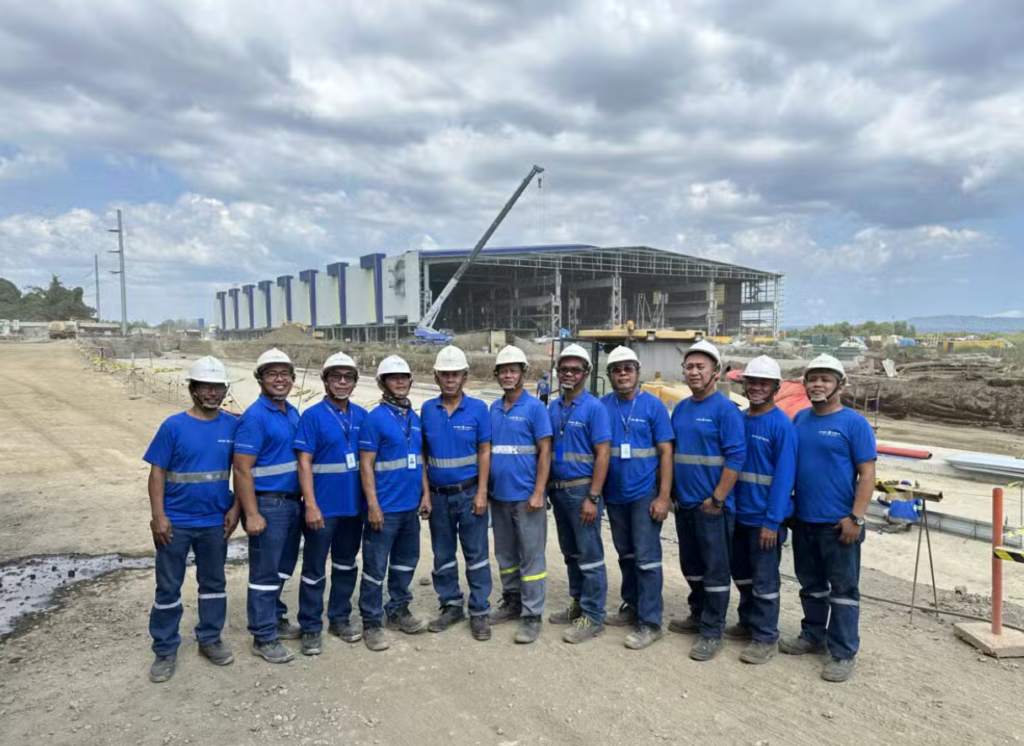
MANILA, Philippines — Transforming a wave of global geopolitical and economic displacement into a historic masterstroke for domestic heavy industrialization, the country’s largest steel producer is bringing Filipino talent back home. SteelAsia Manufacturing Corp. has recruited a highly specialized cohort of repatriated Overseas Filipino Workers (OFWs) to build and commission the nation’s first-ever structural steel sections mill.
The veterans, who spent decades running massive industrial rolling facilities across the Middle East, are currently finalizing construction on the landmark plant in Lemery, Batangas, which is scheduled to begin commercial operations later this year.
For decades, highly skilled Filipino heavy-industry technicians were forced to lease their expertise abroad due to a total lack of specialized upstream manufacturing plants at home. SteelAsia is aggressively reversing this trend:
[ Geopolitical Crises: Middle East Conflict + Historic COVID Layoffs ]
                                       │
                                       ▼ (The Forced Return)
  [ Mass Repatriation: Over 10,000 Displaced Heavy Industrial OFWs ]
                                       │
                                       ▼ (The Structural Capture)
[ SteelAsia Recruitment: Placing Middle East Veterans in Senior Local Roles ]
                                       │
                                       ▼
    [ Result: Bypassing Foreign Tech Reliance to Build the First Integrated Mill ]
The arrangement is particularly critical as ongoing tensions in the Middle East continue to disrupt overseas employment networks. According to data from the Department of Migrant Workers (DMW), the influx of returning industrial laborers includes a massive concentration from Saudi Arabia—which accounts for 74.5% of the total overseas Filipino workforce—alongside key industrial hubs like Bahrain.
The Lemery, Batangas plant represents a massive technological leap forward for Philippine self-sufficiency, addressing a severe vulnerability in the local real estate and infrastructure sectors:
                            [ LEMERY MANUFACTURING GRID ]
                                          │
         ┌────────────────────────────────┴────────────────────────────────┐
         ▼                                                                 ▼
   [ THE PRODUCTION ECOSYSTEM ]                                      [ IMPORT SUBSTITUTION ]
   • **The Mechanical Process:** An industrial rolling facility that      • **The Infrastructure Gap:** Historically, the Philippines has
     takes semi-finished steel billets or blooms and subjects them to        had zero domestic capability to manufacture heavy structural shapes,
     extreme heat and physical compression.                                  forcing 100% reliance on expensive foreign imports.
   • **The Output Portfolio:** Creates heavy finished structural shapes   • **The Self-Sufficiency Pivot:** Once active, the plant will directly
     including **I-beams, H-sections, channel steel, and angle bars**        supply local high-rises, bridges, and heavy industrial mega-projects
     demanded by modern infrastructure.                                     with locally made steel.
The deployment at the Batangas site is just the initial stage of a sweeping, multi-year localization campaign backed by massive capital outlays.
| Corporate Growth Metric | Current Realized Footprint | Projected Future Milestone (2028-Forward) |
| Total Capital Expenditure | Rolling deployment of current asset frameworks. | A massive ₱75-billion investment blueprint to construct four new manufacturing hubs. |
| Annual Production Cap | 2.5 Million Tons of localized steel capacity. | Scaling rapidly to 4.8 Million Tons annually upon final facility integration. |
| Active Repatriated Pool | 106 returning OFWs fully placed across four existing mills. | Projected to generate 30,000 direct and downstream jobs across the industrial pipeline. |
For the returning workers—some of whom faced early retirement or age-related layoffs abroad—the project has offered an unexpected and deeply meaningful second act. Romeo Serna, a veteran stacker operator who spent decades overseas, perfectly captured the emotional weight of the project. “We’re like soldiers who used to fight for other countries and now are being asked to fight for our own nation,” Serna stated.
To ensure this specialized pipeline remains insulated from future talent shortages, the company is concurrently expanding the SteelAsia Academy, providing heavily subsidized technical and vocational training to out-of-school youth and indigenous communities near its manufacturing hubs. By anchoring world-class expertise to sustainable local infrastructure, SteelAsia is proving that the country can finally stop exporting its best minds and start building its own future.