
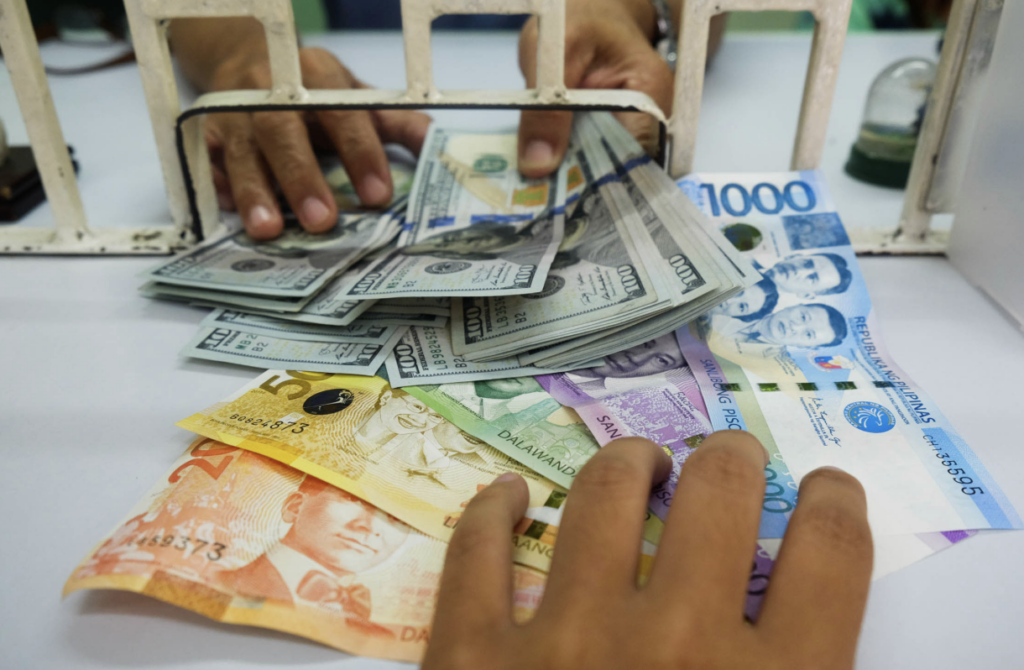
MANILA, Philippines — Cash inflows from Overseas Filipino Workers (OFWs) grew at their slowest pace in nearly three years in March 2026. A combination of elevated inflation in host countries and geopolitical headwinds tied to the Middle East oil crisis has heavily restricted the capacity of migrant workers to send money back to their families.
Data released by the Bangko Sentral ng Pilipinas (BSP) revealed that cash remittances coursed through banks grew by just 2.3% year-on-year, totaling $2.87 billion for the month. This represents the weakest growth rate since June 2023, when inflows rose by 2.1%.
- Monthly Inflow: Cash remittances hit $2.87 billion (up from $2.81 billion in March 2025).
- The Slowdown Trend: This marks a consecutive step down in momentum, following a deceleration to a then-two-year low of 2.6% in February 2026.
- First Quarter Totals: For Q1 2026, total cash remittances reached $8.68 billion, a modest 2.8% increase year-on-year. This pool of capital accounts for 7.4% of the country’s Gross Domestic Product (GDP).
- Personal Remittances: Broadening the scope to include informal channels and in-kind transfers, personal remittances grew 2.3% to $3.203 billion in March.
The United States remains the dominant gateway for electronic and correspondent bank wire transfers, though regional contributions remain diversified:
| Rank | Country of Origin | Percentage Share of Q1 Total |
| 1 | United States | 39.9% |
| 2 | Singapore | 7.6% |
| 3 | Saudi Arabia | 6.3% |
| 4 | Japan | 5.0% |
| 5 | United Arab Emirates | 4.7% |
| — | Other Top Sources | UK (4.3%), Canada (3.0%), Qatar (2.9%), Taiwan (2.9%), HK (2.7%) |
1. Host Country Inflation & The Energy Shock
The primary culprit is the ongoing Middle East conflict, now entering its third month. The war has induced an energy supply shock, inflating the daily cost of living across major host economies. OFWs are earning the same wages but spending more on basic needs abroad, leaving smaller surpluses to send home.
2. The US “One Big Beautiful Act” Impact
Economists noted that structural shifts are also chilling transactions from the West. A 1% excise tax on US-based outward remittances—introduced at the start of 2026—has deterred traditional bank transfers. Many workers are either scaling down their volume or resorting to unrecorded alternative channels.
3. The Exchange Rate Paradox
While the Philippine peso has weakened past the ₱61-per-dollar threshold, giving families more purchasing power per dollar converted, it hasn’t translated to higher baseline dollar inflows. The financial strain on the workers themselves has effectively cancelled out the favorable conversion math.
The deceleration presents structural concerns for domestic growth through the rest of the year:
- Softening Private Consumption: Private consumption is the central engine of the local economy. Financial firms like Goldman Sachs have recently noted that cooling remittance growth, alongside high domestic utility costs and rotating power outages, will likely keep local consumer spending sluggish through 2026.
- The Buffer Stays Intact: On a positive note, the BSP maintained its year-end forecast of 3% total growth ($36.7 billion) for 2026. Central bank officials observed that despite regional tensions, there are still no signs of widespread deployment bans or mass repatriations.
“While overseas employment remains broadly stable, higher cost of living and elevated inflation in host economies are starting to constrain the ability of workers to send more funds, which is tempering year-on-year growth.” — Ruben Carlo Asuncion, Chief Economist, UnionBank of the Philippines