
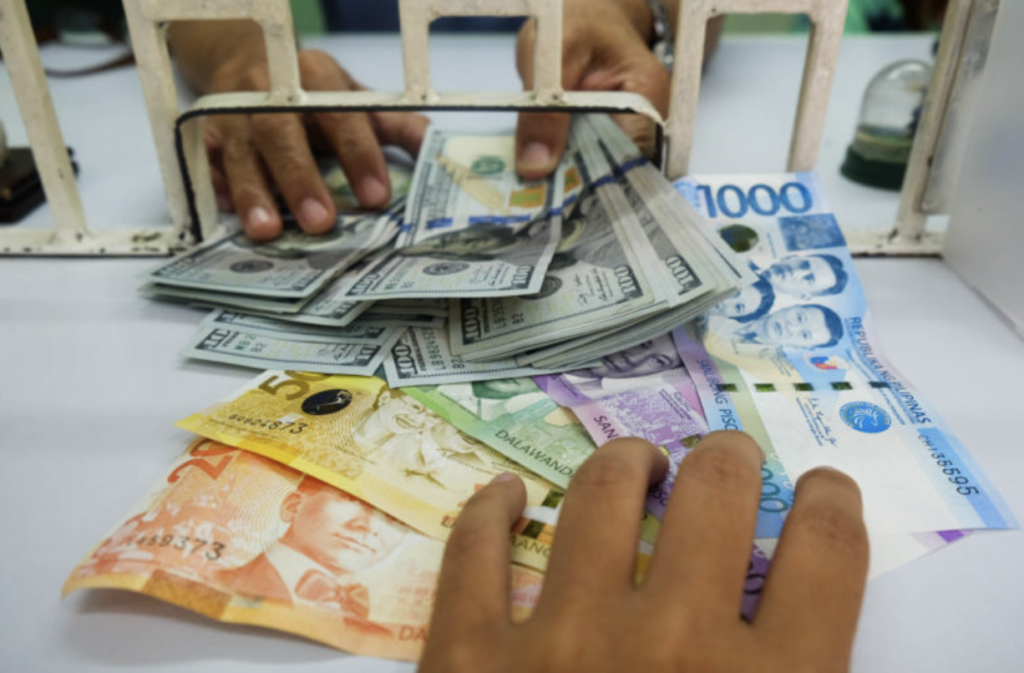
MANILA, Philippines — Snapping a grueling seven-month streak of fiscal bleeding, the country’s external economic position has finally clawed its way back into positive territory. Official data from the Bangko Sentral ng Pilipinas (BSP) reveals that the Philippines registered a $131-million balance of payments (BOP) surplus in May.
The positive turnout marks the first time since October 2025 that foreign currency inflows outpaced outflows, offering a brief operational reprieve from severe geopolitical market pressures.
The tiny but symbolic $131-million surplus serves as a dramatic structural turnaround compared to the devastating multi-billion-dollar losses sustained by the central bank’s foreign reserves across the first four months of the year:
                      [ THE 2026 MONTH-BY-MONTH BOP TRACKER ]
                                         │
         ┌───────────────────────────────┴───────────────────────────────┐
         ▼                                                               ▼
   [ THE DEFICIT WALL ]                                            [ THE MAY TURNAROUND ]
 • **January:** -$373 Million                                     • **May 2026 Surplus:** **+$131 Million**
 • **February:** -$2.28 Billion                                   • **Snapping the Streak:** Effectively puts an end to seven
 • **March:** -$2.64 Billion                                      • continuous months of heavy capital depletion.
 • **April:** -$2.12 Billion                                      • **Cumulative Relief:** Helped slightly narrow the country's
 •                                                                • five-month total deficit to **$7.28 billion**.
Despite the macro improvement, economists warn that the country remains in a precarious position. The five-month running deficit of $7.28 billion has already consumed a massive 93.3 percent of the BSP’s full-year projected deficit cap of $7.8 billion.
The primary catalyst behind the sudden easing of external accounts is the rapid de-escalation of the energy shock in the Middle East following a tentative US-Iran ceasefire memorandum signed on April 8, 2026.
According to Rizal Commercial Banking Corp. (RCBC) Chief Economist Michael Ricafort, the calming of geopolitical waters filtered directly into the domestic economy through several key channels:
[ THE LIQUIDITY RECOVERY PATHWAYS ]
                    │
                    ▼
[ Lower Import Bills ]  ──► Global crude oil prices retreated below their war-driven peak of over $100 per barrel,
                            sharply narrowing the Philippines' massive monthly oil import expenses.
                            │
                           ▼
[ Public Inflows ]      ──► The turnaround was heavily supported by large public-sector foreign exchange transactions,
                            including timely foreign borrowings and debt injections by the national government.
                            │
                            ▼
[ Resilient Pillars ]   ──► Steady, long-term dollar channels—specifically personal remittances from Overseas Filipino
                            Workers (OFWs), foreign direct investments (FDIs), and trade in services—anchored the baseline.
Paradoxically, while the transaction ledger swung into a surplus, the country’s main asset shield continued to shrink. The Gross International Reserves (GIR) slipped down to $103.99 billion at the end of May—the lowest structural reserve print since January 2025 ($103.27 billion) and well below the BSP’s year-end target framework of $111 billion.
                  [ THE MAY GROSS INTERNATIONAL RESERVE LOG ]
                                       │
         ┌─────────────────────────────┼─────────────────────────────┐
         ▼                             ▼                             ▼
   [ DEBT AMORTIZATION ]         [ VALUATION LOSSES ]          [ FX DEFENSE OPERATIONS ]
 • **External Debt Servicing:**• **Gold Price Pullbacks:**     • **Peso Stabilization:** The
   The national government made  • Downward adjustments in the • central bank conducted direct
   heavy structural drawdowns    • global market pricing of the• open-market currency interventions
   on its foreign currency files • BSP’s physical gold holdings• to keep the volatile peso from
   to pay off maturing debts.    • and non-dollar asset bundles.• breaking permanently past 61.
Even with the monthly dip, the BSP emphasized that the remaining $104-billion cash cushion remains entirely sufficient to safeguard local macro stability. The reserves can comfortably cover 6.7 months’ worth of imports of goods and payments for services, while simultaneously representing an adequate safety margin equivalent to 3.9 times the country’s short-term external debt based on residual maturity.
UnionBank Chief Economist Carlo Asuncion and SM Investments Group Economist Robert Dan Roces both noted that while the May data signals a welcome “tactical improvement,” it should not be mistaken for a permanent structural turnaround. Businesses and investors are advised to maintain a cautious stance, as long-term stability hinges entirely on whether structural trade deficits can be permanently contained if global shipping and energy volatility flares up again later in the year.