
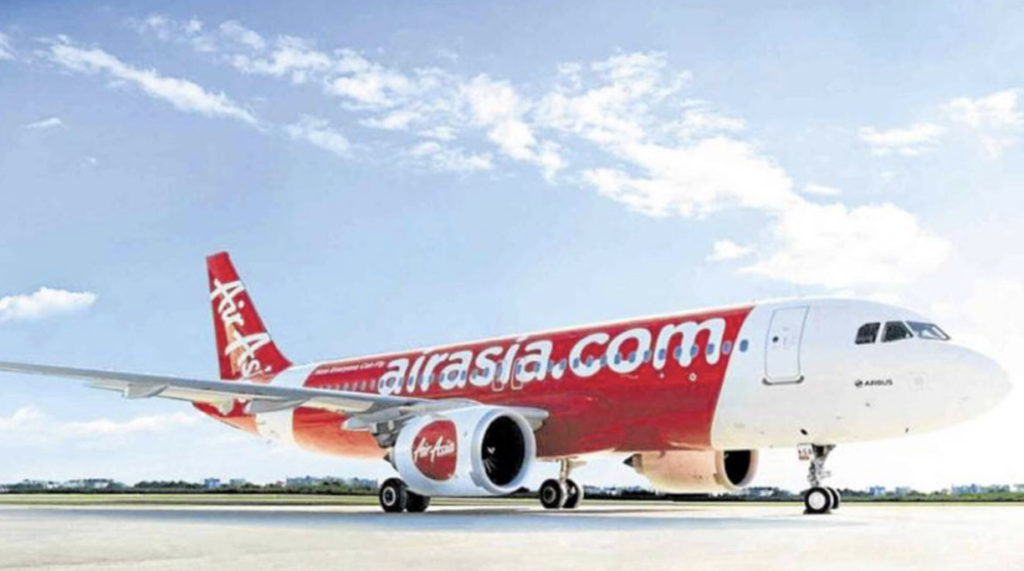
MANILA, Philippines — Navigating high operational friction and severe global fuel price spikes, a major low-cost regional carrier is aggressively shaking up its localized network asset structures. AirAsia Group announced it will completely modernize its Philippine fleet by deploying next-generation Airbus A220 jets to phase out its aging workhorse aircraft.
The multi-billion dollar fleet migration strategy comes as the airline aggressively cuts underperforming routes to defend unit economics against the backdrop of the flaring Middle East conflict.
At a media briefing on Monday, AirAsia Group CEO Bo Lingam revealed that the group’s next-generation platform relies heavily on its massive $19-billion baseline order for 150 Airbus A220-300 jets (which carries an additional option to expand by another 150 planes).
The tactical deployment schedule for AirAsia Philippines involves a tight, long-term multi-stage rollout:
                          [ THE PHILIPPINE FLEET REBORN TIMELINE ]
                                             │
         ┌───────────────────────────────────┴───────────────────────────────────┐
         ▼                                                                       ▼
   [ PHASE 1: THE CURRENT PH OUTFLOWS ]                                  [ PHASE 2: THE A220 ARRIVALS ]
 • **Phasing Out the Old Guard:** AirAsia is immediately pulling out • **Late 2027 Inbound:** The local unit is officially slotted
   older Airbus A320 aircraft whose airframes have pushed past        • to receive its initial block of brand-new A220 aircraft
   the **15-year operational age barrier**.                           • by the tail-end of 2027.
 • **Widebody Reductions:** The fleet update will simultaneously     • **Q1 2028 Commercial Debut:** Frontline passenger routes
   reduce the airline's heavy reliance on widebody Airbus A330 units  • are projected to see full commercial deployment starting in
   across its intermediate regional networks.                        • the **first quarter of 2028**.
Following the full execution of the renewal pipeline, AirAsia Philippines’ mid-range and medium-haul backbone will rely almost exclusively on a dual fleet mixture composed of Airbus A220s and Airbus A321neo aircraft.
The long-term aircraft modernization coincides with a painful, short-term network optimization program. Driven by soaring oil prices linked to Middle East geopolitical tensions, the airline has initiated a wave of temporary route suspensions across major domestic and regional hubs:
[ THE AIRASIA NETWORK CUTS LOG ]
                    │
                    ▼
[ Already Frozen ]  ──► The airline suspended its high-volume **Manila–Hong Kong** route back in May 2026.
                        │
                       ▼
[ July 1 Blackouts ]──► Flight operations connecting **Manila–Tokyo, Cebu–Davao, and Manila–Roxas**
                        will face full suspension starting July 1, 2026.
                        │
                        ▼
[ October 1 Freezes ]──► The airline will pull the plug on its remaining **Manila–Puerto Princesa and
                        Manila–Tagbilaran (Bohol)** routes starting October 1, 2026.
Lingam clarified that these route terminations are strictly tactical and temporary. The group expects to finish its system-wide network recalculation within two to three months, with a substantial portion of the suspended schedules slated to be reactivated between late August and early September.
The fleet overhaul and surgical route slicing are designed to rescue the local unit’s heavily pressured income statement. AirAsia Philippines President Anna Victoria Lu stated that the airline is banking on an aggressive second-semester rebound after enduring a brutal combination of high jet fuel costs, a severely weakened Philippine peso, and softer travel demands earlier in the year.
The carrier’s baseline tracking shows a massive divergence between historical volumes and long-term targets:
| Metric Layer | Historical Count | Targeted Projections |
| 2025 Aggregate Traffic | 5.63 Million Passengers (4.6M Domestic / 1.03M International) | 7.0 Million Passengers Annually (Currently under active strategic revision) |
| Active PH Fleet Inventory | 15 Operational Aircraft on the ground | 25 to 35 Operational Aircraft slated across the next five-year planning horizon |
| AirAsia Group Ultimate Target | 150 destinations serviced across Asia | 1.0 Billion Total Passengers carried across the group ecosystem by end-2027 |
Despite the macroeconomic drag, Lu emphasized that underlying passenger momentum remains highly resilient, pointing to an encouraging 14 percent year-on-year traffic expansion logged in Q1 2026. By substituting older, gas-guzzling platforms with the high-efficiency A220—which delivers up to a 20 percent reduction in fuel burn per seat—the budget carrier hopes to permanently insulate its unit cost structures from future energy shocks, maintaining cheap airfares for the millions of cost-conscious travelers navigating ASEAN air spaces.