
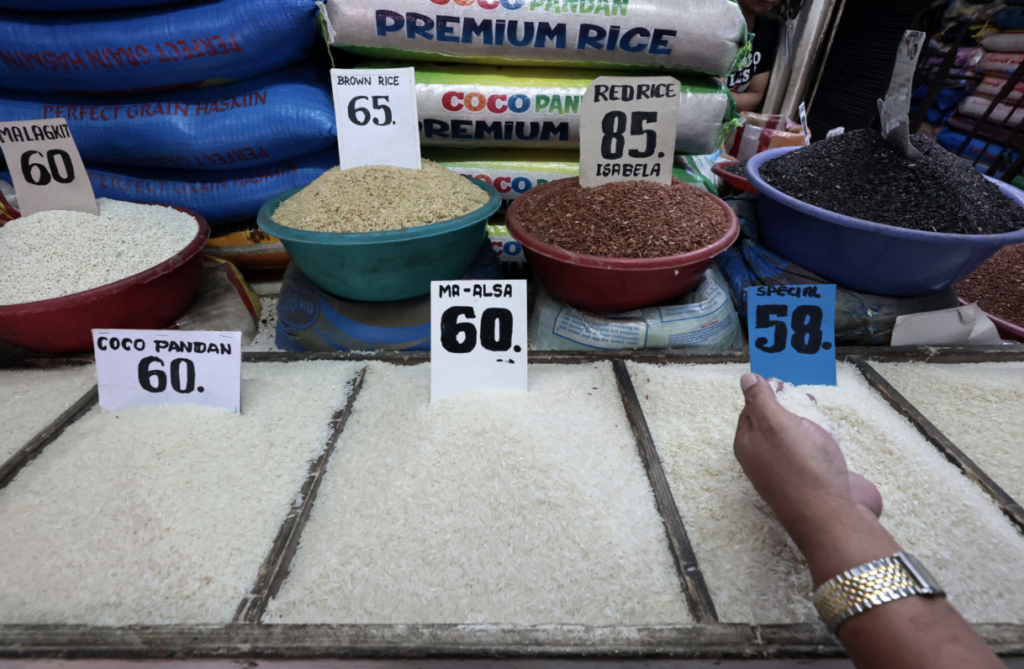
MANILA, Philippines — In a bid to shield Filipino consumers from volatile global market dynamics, the Department of Agriculture (DA) has indicated that the nationwide price ceiling on imported rice is highly likely to be prolonged. Agriculture Secretary Francisco Tiu Laurel Jr. disclosed that the state’s ₱50 per kilogram (kg) price cap on specific imported rice variants may be extended for up to two additional months.
The intervention is designed to soften the economic blow of the ongoing Middle East conflict, which continues to trigger severe global logistics disruptions and fuel price spikes.
The price control mechanism was officially set in motion by President Ferdinand Marcos Jr. through Executive Order (EO) No. 118, which imposed a mandatory 30-day cap on 5-percent broken imported rice nationwide.
However, agricultural leadership believes the initial month-long window will be insufficient to fully absorb global economic shocks:
- Persistent Market Friction: “Definitely, the crisis will not be over. Even if it’s over there, the effects of the crisis are not limited to 30 days. It might be affecting us until the end of the year,” Secretary Tiu Laurel explained to reporters, noting an extension of an extra month or two is highly probable.
- The Intent of EO 118: The signed directive aims specifically to arrest unjustified retail price spikes, deter predatory market hoarding, prevent supply chain abuse, and ensure vulnerable demographics retain stable access to the country’s primary staple.
While imported grains remain strictly governed by the mandatory price ceiling, the DA is simultaneously exploring separate stabilization methods for domestic rice stocks.
The agency is currently finalizing the operational frameworks for a Suggested Retail Price (SRP) covering locally produced regular-milled and well-milled rice varieties:
- The Metro Manila Baseline: Preliminary calculations place the proposed local rice SRP at approximately ₱53 per kg for the National Capital Region (NCR).
- A Region-Centric Matrix: Tiu Laurel stressed that the domestic SRP model will not be a blanket nationwide figure. Due to shipping distances and localized logistics, pricing structures will vary. For instance, rates in parts of Mindanao—which sit far from heavy northern rice-producing plains—may be adjusted slightly higher to accommodate transit costs.
- Non-Binding Strategy: Unlike the strict penalties linked to the imported rice price cap, the domestic SRP will function as a voluntary guide. Under current statutes, retailers are not legally mandated to follow the SRP, but the metrics will serve as a transparent “referential anchor” to guide public purchasing power.
The DA noted that it is treading very carefully to ensure the twin pricing strategies do not inadvertently punish local farmers, millers, and legitimate industry traders. Extensive multi-sectoral consultations are actively being carried out across various administrative regions to secure logistical harmony.
As the country continues to operate under heightened inflationary strains, state economists view these aggressive rice market safeguards as critical buffers to prevent basic grocery baskets from climbing completely out of reach for ordinary citizens.