
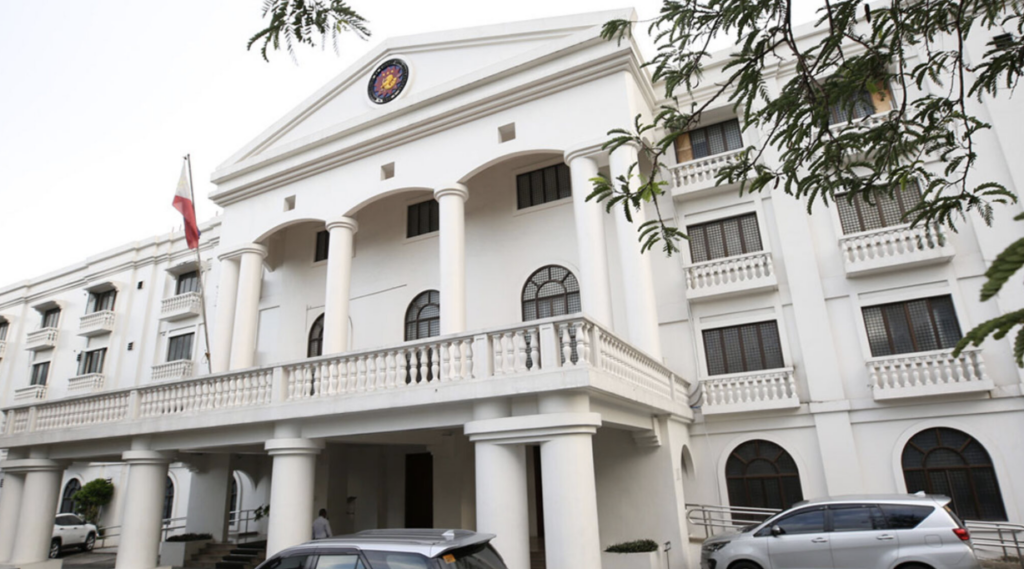
MANILA, Philippines — Moving to pull back the curtain on how trillions in public funds are executed, the national government has deployed a real-time digital surveillance system for public coffers. The Department of Budget and Management (DBM) has officially launched a centralized online platform allowing everyday citizens to track government money from initial legislative approval down to actual field disbursement.
The digital rollout comes at a critical time, debuting alongside the administration’s blueprint for a massive ₱7.2-trillion proposed national budget for fiscal year 2027.
The newly developed system, officially named the Centralized Open Monitoring Platform for Appropriations and Spending Statistics (COMPASS), is engineered to eliminate the complex financial jargon that historically shields government budgets from public scrutiny.
Developed under Acting Budget Secretary Kim Robert C. De Leon, the searchable portal strips away institutional barriers by consolidating disparate ledger systems into a single dashboard:
                            [ DBM COMPASS DATA EXTRACTION MATRIX ]
                                              │
         ┌────────────────────────────────────┴────────────────────────────────────┐
         ▼                                                                         ▼
   [ END-TO-END FINANCIAL SEGMENTS ]                                         [ MULTI-DIMENSIONAL FILTERS ]
 • **The Lifecycle Pipeline:** COMPASS actively updates the three    • **Granular Tracking:** Users can segment data streams by specific
   core phases of public finance: **Allotments** (budget authority     government departments, regional offices, and specific project
   issued), **Obligations** (funds committed via contracts), and       funding purposes.
   **Disbursements** (actual cash paid out).                          • **Satellite Reinforcement:** The portal links directly with
 • **Document Repository:** The system hosts downloadable and        • *Project DIME*, using satellite tracking technology to physically
   searchable versions of the National Expenditure Program (NEP)      • cross-verify infrastructure project status in remote provinces.
   and the General Appropriations Act (GAA).
While the platform provides high-level transparency, the framework driving the upcoming 2027 budget highlights immense fiscal constraints. In National Budget Memorandum No. 158, the DBM outlined that the proposed ₱7.2-trillion spending plan represents a 6 percent climb over 2026 allocations, taking up roughly 21.7 percent of the country’s gross domestic product (GDP).
However, state planners face an uphill climb due to severe economic drag factors:
[ THE 2027 FISCAL STRAIN CORRIDOR ]
                    │
                    ▼
[ Automatically Appropriated ]──► The government is navigating an incredibly narrow fiscal space heavily choked
                                  by rising interest payments and automatically locked National Tax Allotments for LGUs.
                                  │
                                 ▼
[ Lowered Growth Baseline ]   ──► The interagency Development Budget Coordination Committee (DBCC) was forced to scale
                                  back the 2026 GDP growth target down to a modest **3.5% to 4.5%**.
                                  │
                                  ▼
[ Geopolitical Shocks ]       ──► Ongoing regional fuel volatility, sparked by macro energy conflicts involving the US,
                                  Israel, and Iran, continues to spike domestic logistics and commodity inflation.
The deployment of COMPASS is not merely an incremental technological upgrade; it represents a defensive policy response to severe systemic stress. The launch follows widespread public outrage over a massive multi-billion-peso graft scandal involving flood control allocations, which heavily disrupted national infrastructure timelines and dampened private consumer confidence.
President Ferdinand Marcos Jr. emphasized during the launch that public funds belong exclusively to the people, noting that transparency functions as the ultimate safeguard against corruption. To prevent future leakages, the DBM has instituted a strict “readiness-to-implement” policy for the 2027 cycle: line agencies must conclusively prove their projects are vetted, cleared, and immediately actionable before a single peso is mapped to their name. By putting live expenditure analytics online, the administration aims to rebuild public trust and force greater institutional accountability as the budget heads to Congress for intense legislative deliberations.