
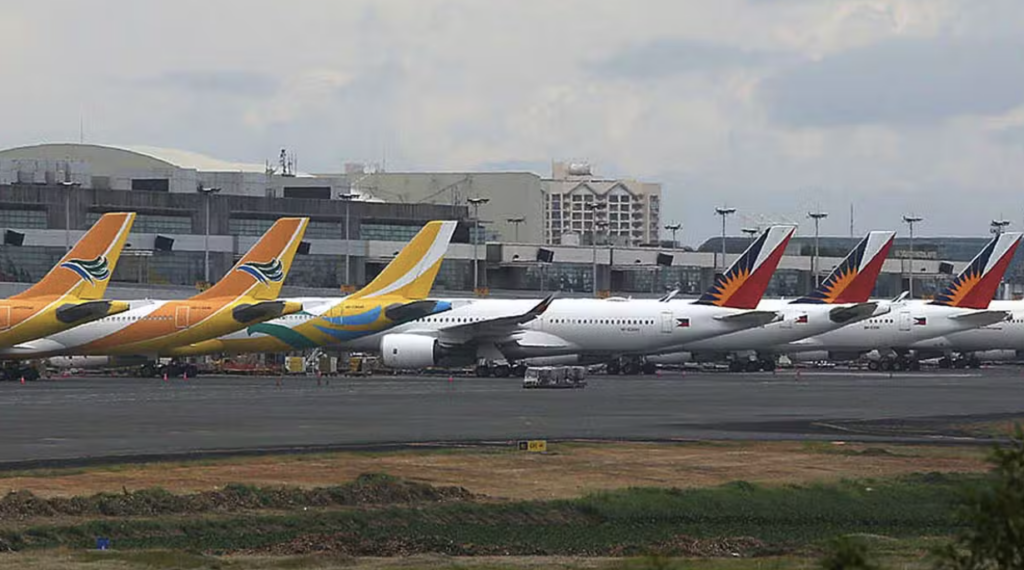
MANILA, Philippines — Travelers can expect high ticket prices to persist through the first half of May, despite a minor adjustment in fuel surcharges. On Wednesday, April 29, 2026, the Civil Aeronautics Board (CAB) announced that the fuel surcharge will be lowered to Level 18 for the period of May 1 to May 15, a slight step down from the Level 19 rates seen in late April.
While this marks a small relief, the surcharge remains significantly elevated—more than five times higher than pre-crisis levels—due to the ongoing volatility in global oil markets linked to Middle East tensions.
The new Level 18 surcharge means that in addition to the base fare, passengers will pay:
- Domestic Flights: An additional P593 to P1,734, depending on the distance.
- International Flights: An additional P1,958.44 to P14,561.87.
For comparison, the previous Level 19 surcharge (April 16–30) saw domestic charges range from P627 to P1,834 and international charges from P2,070 to P15,397. Before the Middle East conflict escalated, airlines were operating under Level 4, where domestic surcharges were as low as P117 to P342.
Airline executives warn that “inflated fuel prices” will continue to be a major challenge for the remainder of the second quarter.
- Cebu Pacific Forecast: CEO Mike Szucs stated that he expects fuel prices to ease only by the third quarter of 2026. He noted that jet fuel, the airline’s largest expense, has more than doubled in cost.
- Supply Status: Both Cebu Pacific and Philippine Airlines have assured the public they have secured enough jet fuel supply to last through the end of June.
- Global Market Volatility: While global jet fuel prices dipped slightly from a peak of $209 per barrel in early April to $184.63 mid-month, they remain far above the prewar average of less than $100 per barrel.
- Middle East Conflict: Though a fragile truce is currently being observed by major regional powers, peace talks remain stalled, keeping global energy markets on edge.
- Seasonal Demand: High fares coincide with the peak summer travel season in the Philippines, where demand for domestic and international flights typically surges.
- Operational Expenses: Beyond fuel, airlines are grappling with a weakening Philippine peso, which increases the cost of dollar-denominated expenses like aircraft maintenance and leasing.
Under CAB Resolution No. 25, the fuel surcharge is an optional fee intended to help airlines recover fuel costs. It may only be removed entirely if the one-month average price of jet fuel falls below P21 per liter—a threshold that seems far off under current market conditions.