
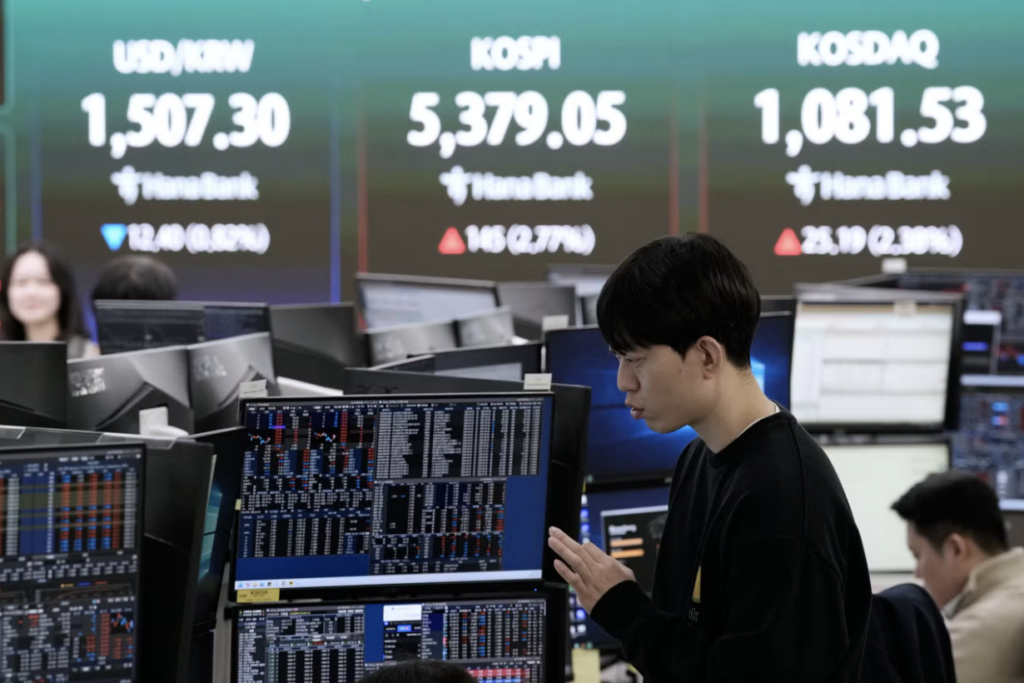
Global oil prices surged sharply amid escalating tensions in the Middle East, while Asian stock markets posted modest gains as investors navigated uncertainty with cautious optimism.
Oil markets reacted strongly to fears that the ongoing conflict could disrupt supply routes, particularly through the critical Strait of Hormuz. Benchmark crude prices jumped significantly, with U.S. oil rising over 11% and Brent crude climbing nearly 8%, reflecting growing concerns over prolonged instability.
Asian Markets Show Mixed but Positive Movement
Despite the spike in oil prices, several Asian stock markets managed to record moderate gains. Japan’s Nikkei and South Korea’s Kospi both rose, signaling investor resilience even as global risks increase.
However, gains were not uniform across the region. China’s markets experienced slight declines, highlighting the uneven impact of rising energy costs and geopolitical uncertainty on different economies.
Oil Supply Concerns Drive Market Volatility
The sharp rise in oil prices is largely tied to fears of supply disruptions, especially as shipping activity in the Strait of Hormuz remains restricted. This narrow passage is a key route for global oil shipments, and any threat to its operations can significantly affect global supply.
Analysts warn that a prolonged conflict could intensify these disruptions, potentially leading to sustained high fuel prices and broader economic consequences.
Global Markets Remain on Edge
While Asian markets showed some stability, global financial markets remain highly sensitive to developments in the Middle East. Investors are closely monitoring the situation, balancing strong economic data in some regions against the risks posed by rising energy costs.
The volatility highlights how interconnected global markets are, with geopolitical tensions quickly translating into price movements across commodities and equities.
Outlook: Uncertainty Continues
Looking ahead, market direction will largely depend on how the conflict evolves. Continued escalation could push oil prices even higher and weigh on global economic growth, while any signs of de-escalation may provide temporary relief.
For now, both energy and financial markets remain in a fragile state, reacting in real time to geopolitical developments.