
MANILA, Philippines – As the buzz around electric vehicles (EVs) continues to grow across the archipelago, Toyota Motor Philippines (TMP) is shifting its focus toward a critical, often overlooked question: what happens to these high-tech batteries once they reach the end of the road?
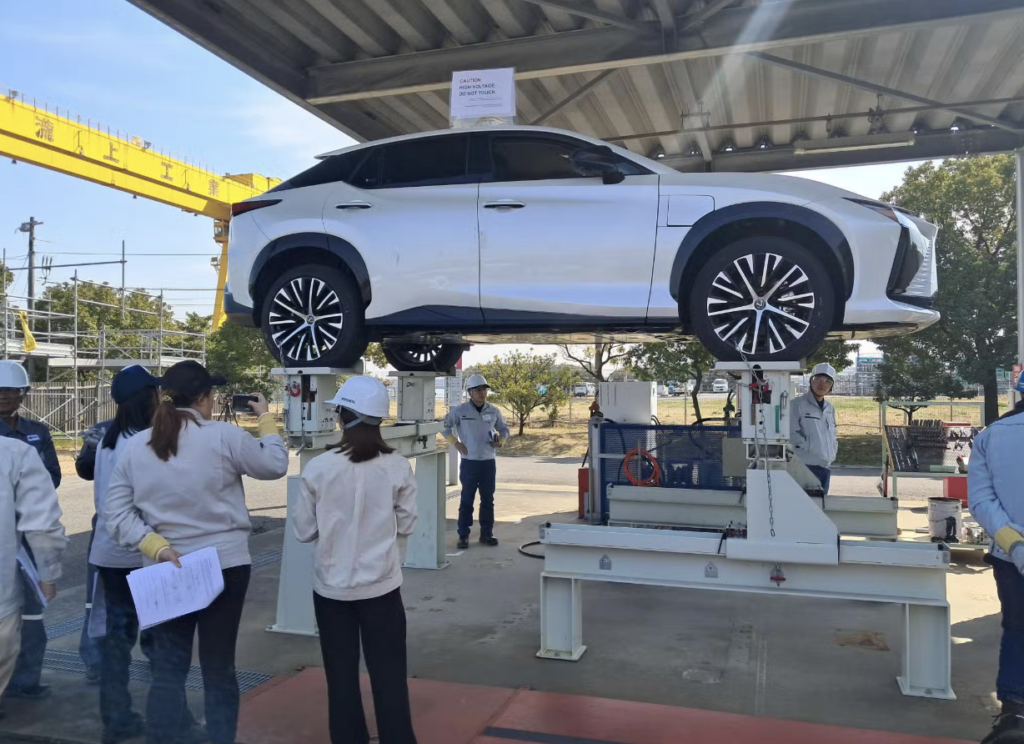
In a proactive move to ensure the “green” revolution stays green, Toyota recently sent its local dismantling partner, En Tsumugi ELV Dismantler Corp., to Aichi, Japan, for intensive training. The goal? To master the delicate art of dismantling, storing, and recycling EV batteries.
Based in Mexico, Pampanga, En Tsumugi is one of only two facilities in the Philippines—and only four in Southeast Asia—recognized by Toyota for high-standard vehicle recycling. This initiative is part of Toyota’s “Global 100 Dismantlers Project,” a worldwide effort to create a circular economy where car parts are reused rather than discarded.
While EVs are celebrated for reducing tailpipe emissions, their production and disposal can be resource-intensive. By perfecting the recycling process, Toyota aims to recover precious raw materials, reducing the environmental impact of manufacturing new batteries and lowering the overall carbon footprint of every vehicle.
“This is about more than just selling cars,” said Masando Hashimoto, President of Toyota Motor Philippines. “Our ‘Beyond Zero’ commitment means we are taking responsibility for the entire lifecycle of our vehicles—from the showroom to the recycling center.”
The timing is critical. Data from the Chamber of Automotive Manufacturers of the Philippines (CAMPI) shows that electrified vehicles now make up over 11% of total car sales in the country. Toyota and Lexus are leading this charge, seeing a 33% year-on-year growth in hybrid and electric sales.
With the Department of Trade and Industry (DTI) set to launch new incentives for EV manufacturing later this year, the number of batteries on Philippine roads is only expected to climb.
Japan is already ahead of the curve, implementing sophisticated traceability systems to track batteries throughout their lives. By bringing that expertise to Philippine soil, Toyota isn’t just preparing for a trend—it’s building the infrastructure for a sustainable transport industry.
As the Philippines races toward a carbon-neutral future, the focus is no longer just on how fast an EV can go, but on how responsibly it can be retired.