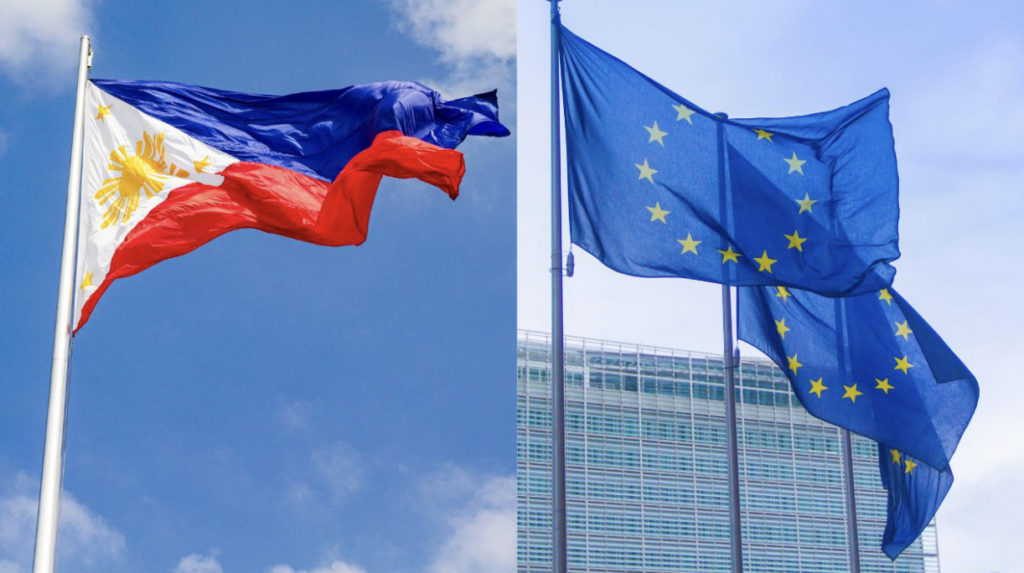
MANILA, Philippines — In a strategic move to secure global supply chains and promote environmental responsibility, the European Union (EU) and the Philippines have officially launched a joint study on critical raw materials (CRMs). Reported on Monday, May 11, 2026, the partnership aims to map the country’s mineral potential while establishing world-class sustainability standards for future European investments.
The initiative, conducted alongside the Department of Environment and Natural Resources (DENR), was highlighted by EU Ambassador Massimo Santoro during the EU-ASEAN Sustainability Summit in Cebu.
The collaboration serves as a technical framework to align the Philippine mining sector with the EU’s stringent Critical Raw Materials Act.
- Investment Roadmap: The study will identify specific high-potential sites for minerals like nickel, copper, cobalt, and lithium, guiding European companies toward “reciprocal investments.”
- Sustainability Standards: A primary focus is ensuring that extraction activities adhere to high Environmental, Social, and Governance (ESG) standards, specifically protecting the rights of indigenous communities.
- Supply Chain Resilience: For the EU, the study is a move to diversify its sources of minerals essential for the green energy transition, aerospace, and defense industries, reducing reliance on single-country suppliers.
The Philippines is currently positioned as a key player in the global “green” economy due to its vast, largely untapped reserves.
- Global Ranking: The Philippines is the world’s second-largest producer of nickel ore and holds significant deposits of copper and chromite.
- Untapped Potential: The Mines and Geosciences Bureau (MGB) estimates that 30% of the country’s total land area (approx. 9 million hectares) has high mineral potential, though less than 5% is currently covered by mining tenements.
- Strategic Shift: This partnership marks a shift from exporting raw ores to exploring value-added processing (e.g., battery grade nickel production) within the Philippines, supported by European technology.
The partnership was first proposed during the historic 2023 visit of European Commission President Ursula von der Leyen to Manila.
- 2023–2025: Initial scoping and diplomatic negotiations between the EU and the Marcos administration.
- February 2026: The Philippines signed a separate MOU with the United States to diversify critical mineral supply chains, signaling its growing importance in Western “friend-shoring” strategies.
- May 2026: Official launch of the joint EU-PH study. While there is no fixed completion date due to the technical nature of the survey, preliminary findings are expected to influence the 2027 Philippine Mining Investment Plan.
Under EU law, 34 minerals are classified as “critical” because they are indispensable for modern technology.
| Mineral | Key Applications |
| Nickel | EV batteries, stainless steel, renewable energy storage. |
| Copper | Electrical wiring, green energy infrastructure, electronics. |
| Cobalt | High-density lithium-ion batteries. |
| Lithium | Portable electronics and electric vehicle power cells. |
Ambassador Santoro emphasized that the EU is not interested in extraction at any cost. “It is a very specific terrain,” he noted, “so we wish to be sure that what we are studying together meets the same views of both sides,” particularly regarding environmental safeguards and inclusive growth for host communities.