
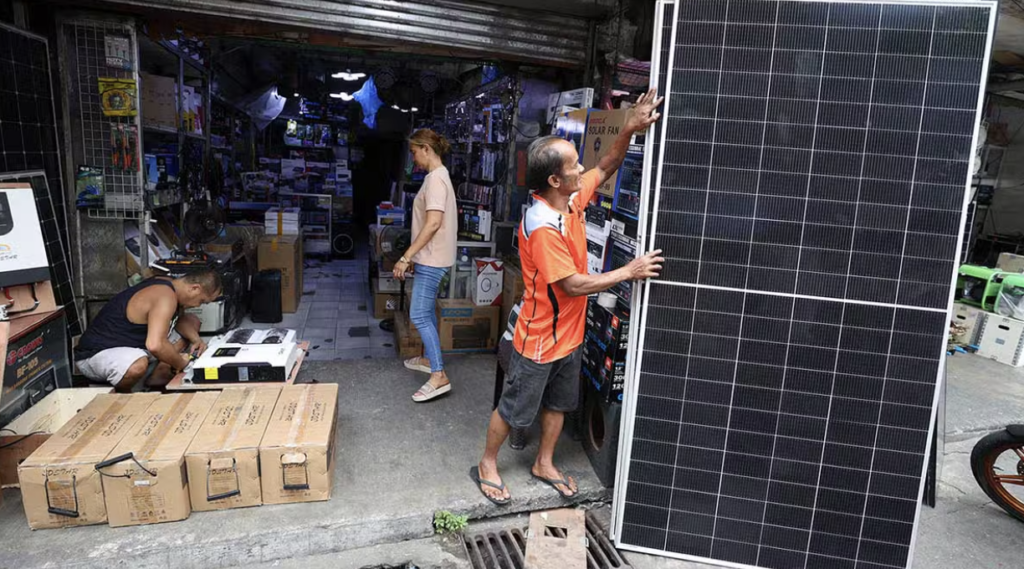
MANILA, Philippines — Driven by a massive wave of households switching to rooftop renewable energy to combat high electricity rates, the government is stepping in to clean up an uncertified market. The Department of Trade and Industry (DTI) is drafting a new administrative mandate that will enforce strict, mandatory quality checks and government certifications for all solar panel systems entering the local market.
The regulatory push, designed by the DTI’s Bureau of Philippine Standards (DTI-BPS), aims to eliminate a sudden influx of cheap, substandard components that power distributors warn are putting residential structures and grid stability at serious risk.
The regulatory pivot comes directly on the heels of formal warnings raised by the Manila Electric Co. (Meralco) and energy-focused lawmakers regarding “guerrilla” solar providers—unregistered entities selling bargain-rate equipment that completely bypasses state safety assessments.
[Rising Retail Power Prices] ──► Massive Consumer Migration to Rooftop Solar Panels
                                             │
                                             ▼ (The Regulatory Blind Spot)
[Flood of Cheap, Uncertified Imports] ──► DTI-BPS Flags Lack of Domestic Product Certification
                                             │
                                             ▼
                             [Safety Deficits and Fire Risks Increase]
According to data compiled by utility firms and the Institute for Climate and Sustainable Cities (ICSC), an estimated one-third of all active solar installations within key urban distribution areas operate entirely outside the grid’s registered network.
Unlike previous optional checks, Frank Macula, chief of the Electrical and Electronic Products Certification Division of the DTI-BPS, confirmed that the proposed order will subject the entire solar equipment supply chain to mandatory clearance tracking:
                            [ TARGETED REGULATORY SECTORS ]
                                           │
         ┌─────────────────────────────────┴─────────────────────────────────┐
         ▼                                                                   ▼
   [ ENERGY PROCESSING & STORAGE ]                                     [ PHYSICAL CORE CONDUITS ]
   • Solar Photovoltaic (PV) modules / main panels.                    • Heavy-duty solar-grade electrical cables.
   • Battery Energy Storage Systems (BESS).                            • Dedicated digital charge controllers.
   • Power Inverters (the primary point of failure in grid feedback).
Once finalized, all manufacturers and importers will be legally barred from selling hardware locally unless they secure formal seals from the DTI-BPS. The agency will process compliance using two structural standards:
| Certification Pathway | Targeted Manufacturing Source | Enforcement Consequence |
| Philippine Standard (PS) Quality Mark | Awarded exclusively to verified locally manufactured green energy goods. | Products failing to display the official domestic marks will be barred from distribution and subject to immediate seizure by state agents. |
| Import Commodity Clearance (ICC) | Mandated for all internationally imported solar shipments entering local ports. |
Recognizing the massive logistical transition required for current distributors, the DTI has designed a highly collaborative implementation runway to prevent immediate market friction:
- Public Consultation (May 26, 2026): The DTI will hold its first official public review, convening experts from the Department of Energy (DOE), the Energy Regulatory Commission (ERC), and distribution utilities like Meralco to align technical benchmarks.
- 60-Day Commentary Window: Following the initial forum, private suppliers, consumer groups, and legal stakeholders will be given exactly 60 days to formalize counter-recommendations.
- One-Year Grace Period: Once the administrative order is officially signed into law, the DTI will grant a strict one-year transition period for the industry to clear existing uncertified warehouse stocks before field confiscations and retail penalization officially begin.
By setting up a rigorous quality checkpoint, trade officials and engineering bodies aim to transform rooftop solar from a high-risk, “do-it-yourself” gamble into a highly standardized, fire-safe consumer asset—ensuring that the country’s necessary transition toward sustainable, decentralized power generation is not compromised by substandard hardware.