
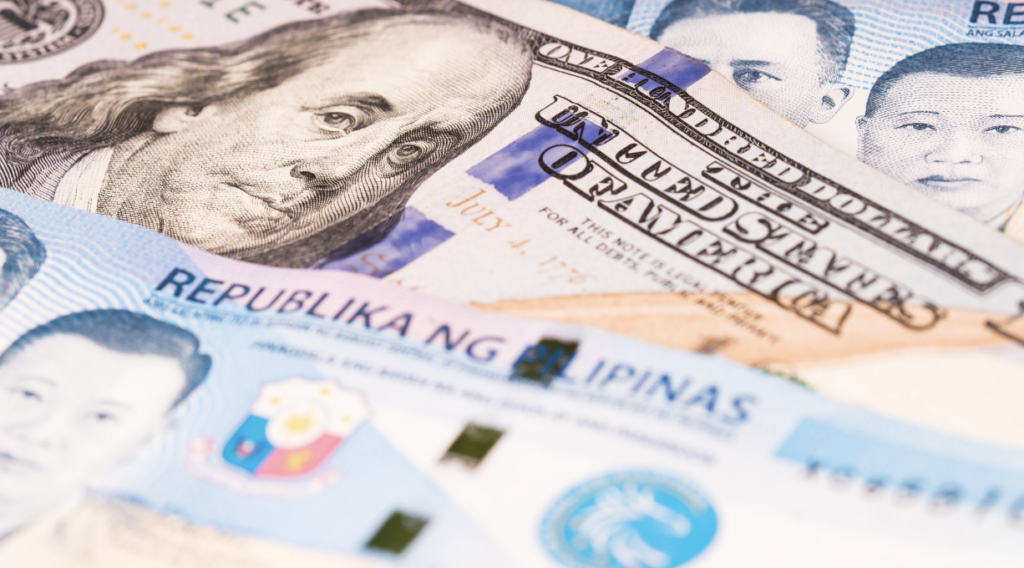
MANILA, Philippines — Caught in a crosswinds of global energy disruptions and aggressive international bond positioning, the local currency faces intense upward pressure that is heavily detaching it from domestic economic growth signals. Global financial giant MUFG Global Markets Research projects that the Philippine peso will remain highly sensitive to volatile global oil markets, surging US Treasury yields, and hawkish central bank guidance.
The currency tracking baseline arrives directly after the peso plunged to a historical, unprecedented closing record low of 61.75 per US dollar last week.
According to MUFG’s client advisory note, a prolonged, active conflict in the Middle East continues to amplify structural vulnerabilities across import-dependent Asian markets, driving the greenback’s broad-based strength:
[Prolonged Middle East War] ──► Drives Elevated Global Crude Oil Prices
                                          │
                                          ▼ (The Capital Flight Pipeline)
[Surging US Treasury Yields]     ◄── Triggers Global Dollar Strength ──► Drags Peso to Historical 61.75 Low
“For the week ahead, the peso will likely remain more sensitive to oil prices, US yields, and Bangko Sentral ng Pilipinas (BSP) rhetoric than to domestic growth data,” MUFG stated. The institution noted that while persistent oil spikes and stubborn greenback strength will keep the peso-dollar exchange rate pinned near the upper ceiling of its current range, a highly defensive posture from the country’s central bank should mitigate the threat of a cascading, panicky freefall.
The continuous depreciation of the local currency produces a distinct set of macroeconomic counter-weights across the domestic market, splitting the financial impact down the middle:
                         [ THE DEPRECIATION BALANCE SHEET ]
                                         │
        ┌────────────────────────────────┴────────────────────────────────┐
        ▼                                                                 ▼
  [ EXPORT & CONSUMPTION BOOSTS ]                                   [ DEBT & INFLATION STRAINS ]
  • Overseas Filipino Worker (OFW) remittances stretch              • Substantially drives up imported inflation across
    much further in localized peso terms, buffering food spending.    vital energy, manufacturing, and food imports.
  • Exporters capture immediate, sharp price competitiveness       • Heavily escalates the actual corporate and sovereign
    on international shipping floors.                                 peso cost required to service foreign-currency debt.
To break the momentum of war-driven imported inflation, the monetary board is actively reviewing its interest rate corridor. The policy shift marks a significant departure from multi-year holding patterns:
| Timeframe Baseline | Central Bank Monetary Action | Policy Stance & Intent |
| April 2026 | Implemented a quarter-point (0.25%) rate increase to 4.5%. | The first official interest rate tightening move executed by the central bank in over two years. |
| May 2026 Outlook | Actively considering an off-cycle interest rate hike. | Driven by growing concerns from leadership that the state may be “behind the curve” on sticky inflation. |
BSP Governor Eli Remolona Jr. clarified that while the ongoing currency depreciation introduces distinct consumer pricing risks, it also acts as a natural stabilizer to help narrow the country’s persistent trade deficit by penalizing non-essential imports. Remolona reiterated that the central bank does not maintain or defend a rigid, specific exchange rate target, choosing instead to allow structural market forces to dictate the currency’s baseline valuation while stepping in purely to smooth out disorderly, speculative market swings.