
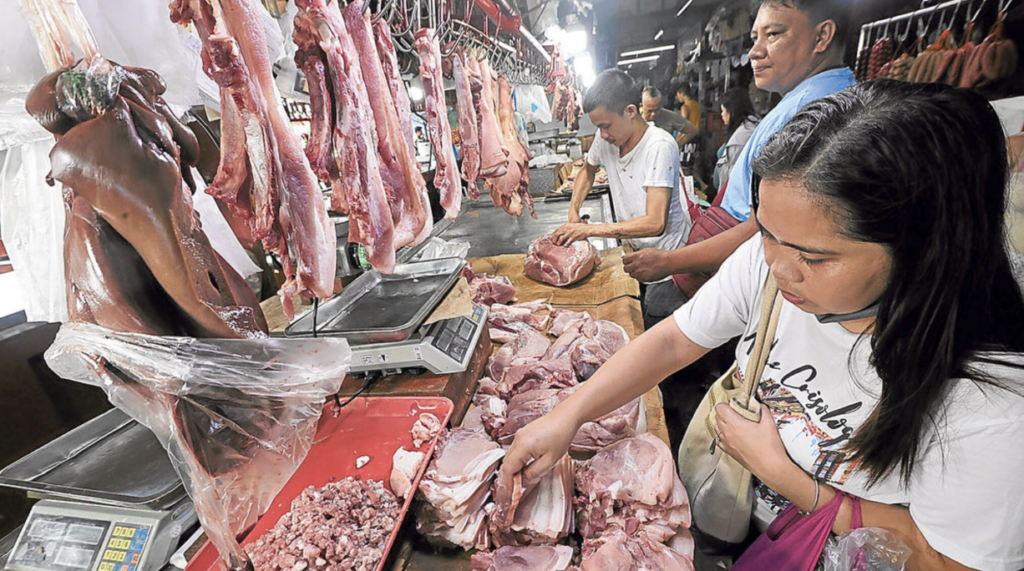
MANILA, Philippines — A major regulatory intervention aimed at capping rising food costs has triggered intense pushback from local agricultural stakeholders, who warn of severe market imbalances. Various industry groups have cautioned that the government’s sudden, near-fourfold expansion of low-tariff pork import quotas could distort local commerce, create unfair market competition, and paralyze the domestic hog sector’s fragile recovery from disease.
The friction stems from Executive Order No. 116, signed by President Ferdinand Marcos Jr. on May 19 and made public on Friday, May 22. The directive responds to ongoing supply deficits caused by the relentless spread of African Swine Fever (ASF).
To shield consumers from soaring market prices and broader inflationary pressures, the new executive order aggressively adjusts the state’s Minimum Access Volume (MAV) limits for the remainder of the year:
[2026 Original Pork MAV Baseline] ──► Expanded via Executive Order No. 116
                                               │
                                               ▼ (The Multi-Agency Influx)
[204,210 Metric Tons (MT) Total Quota] ◄── [An Additional 150,000 MT Injected into the Grid]
Under the new guidelines, tariffs for imported pork fresh, chilled, or frozen meat within the MAV quota remain at a lower 15 percent, while out-quota volumes face a higher 25 percent duty. The order specifically instructs the MAV Management Committee to divide the newly approved 150,000 MT volume into two distinct public-private distribution tracks:
- 30,000 MT allocated directly to meat processors.
- 120,000 MT allocated to the state-run Food Terminal Inc. (FTI) and the Kadiwa ng Pangulo program.
Rather than celebrating the market intervention, private trade representatives argue that the heavy allocation of low-tariff quotas directly to government entities fundamentally violates fair-trade principles.
                          [ DISPUTED CORRIDORS OF COMPETITION ]
                                            │
        ┌───────────────────────────────────┴───────────────────────────────────┐
        ▼                                                                       ▼
  [ THE MARKET DISTORTION THREAT ]                                        [ THE PRIVATE MARKET DROP-OUT ]
  • Meat Importers and Traders Association (MITA) President               • Critics note that state enterprises like FTI already
    Emeritus Jesus Cham warned that the state is effectively                 maintain statutory powers to import goods duty-free.
    attempting to take over the pork trade.                               • Giving them a massive chunk of the MAV allocation
  • Argued this contradicts the foundational MAV mandate of                 undercuts private entities, which could force dismayed
    maintaining minimal government intervention in open markets.              independent traders to completely exit the supply chain.
“Obviously, this fosters a situation wherein the private sector cannot compete. Many traders and importers already dismayed will likely drop out of the market.” — Jesus Cham, MITA President Emeritus
For domestic hog raisers, the tariff adjustments feel like a major setback given that local farms are still spending millions to implement biosecurity upgrades to combat ASF.
                         [ LOCAL HOG FARMING SECTOR IMPACT ]
                                          │
       ┌──────────────────────────────────┴──────────────────────────────────┐
       ▼                                                                     ▼
 [ THE LACK OF CONSULTATION ]                                         [ THE TARIFF DRAIN ]
 • National Federation of Hog Farmers Inc. Vice Chair Alfred Ng        • The sudden influx lowers tariffs from 25% down to 15%
   revealed that local producers were completely left out of           for an additional 150 million kilograms of foreign meat.
   the decision-making process.                                      • Warned that the adjustment simply benefits a handful of
                                                                       large importers while harming millions of local livelihoods.
In contrast to the worries voiced by raisers and independent traders, the manufacturing sector welcomed the move as a necessary step to stabilize the market. Philippine Association of Meat Processors Inc. (PAMPI) Director Jet Ambalada stated that the group appreciates the administration’s recognition of the supply shortfall.
Ambalada urged the government to distribute the processed meat quotas immediately so factories can use the cheaper raw materials to stabilize consumer prices and counter the country’s rising food inflation before the peak rainy season sets in.