
MANILA, Philippines — Amid a national energy emergency and soaring fuel prices, the Department of Science and Technology (DOST) is promoting the use of bamboo pellets and charcoal briquettes as sustainable, locally sourced alternatives to imported fossil fuels. Developed by the Forest Products Research and Development Institute (DOST-FPRDI), these biomass innovations aim to bolster the country’s energy security while supporting rural livelihoods.
DOST Secretary Renato Solidum Jr. emphasized that converting abundant local biomass into efficient fuel offers a renewable solution to the country’s vulnerability to global fuel supply disruptions.
Bamboo is being positioned as an ideal energy source due to its rapid growth—some species grow over a meter per day—and its ability to thrive in poor soil conditions.
- High Energy Density: Researcher Dr. Anniver Ryan Lapuz noted that one cubic meter of bamboo pellets can generate up to 12.15 gigajoules (GJ) of energy.
- Versatile Applications:
- Industrial: Can be used for co-firing in coal power plants to reduce greenhouse gas emissions or as supplementary fuel for biomass-based industries (alongside bagasse and rice hulls).
- Household: Denser and with a higher heating value than traditional charcoal (“uling”), making it an efficient cooking fuel.
- Production Process: Fresh bamboo is split, shredded into chips, sun-dried, and then processed into a fine powder before being compacted by a pelletizer.
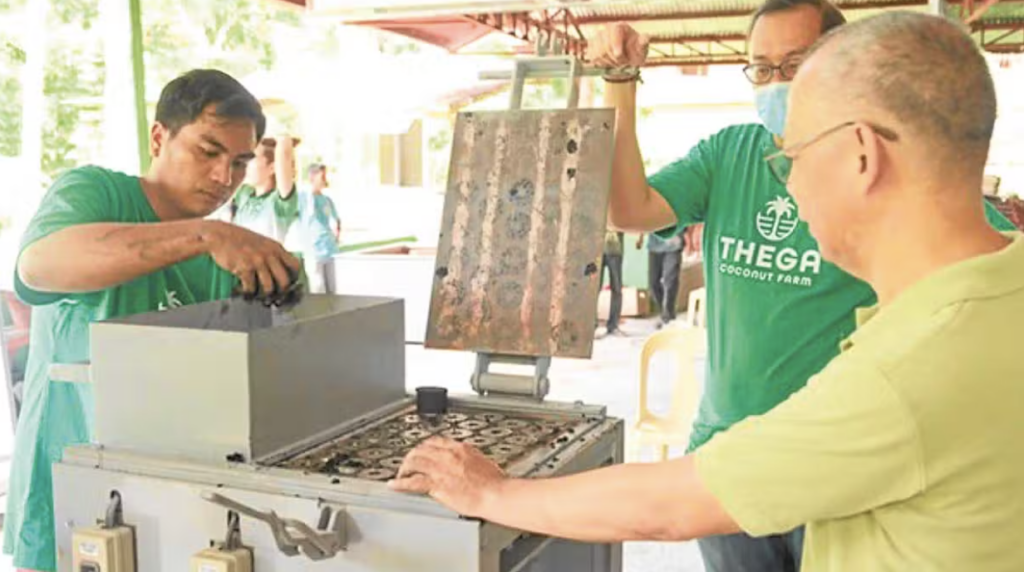
In addition to pellets, the DOST-FPRDI has developed charcoal briquettes made from compacted charcoal fines and binders.
- Efficiency: These briquettes burn slower, provide more intense heat per unit volume, and are virtually smokeless compared to ordinary charcoal.
- Livelihood Opportunities: DOST-FPRDI Director Rico Cabangon stated that the institute has manual and hydraulic briquetting technologies ready for adoption by small businesses and rural cooperatives.
- Localized Systems: The goal is to empower communities to establish small-scale production hubs, generating income while creating a more resilient, localized energy system.
The push for biomass fuel is part of a broader strategy to mitigate climate change and reduce reliance on finite resources. By leveraging the Philippines’ abundant agro-forest waste and fast-growing bamboo species, the DOST hopes to provide an affordable and secure energy alternative for both industrial and domestic users.
“By turning a fast-growing local resource like bamboo into a fuel alternative, we are helping build a future that is… more grounded in sustainable materials,” Cabangon added.