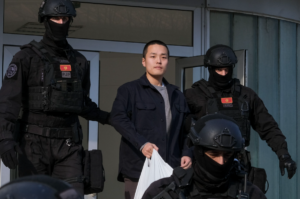
MANILA, Philippines – In a landmark verdict that underscores the devastating human toll of cryptocurrency hubris, South Korean tech mogul Do Kwon was sentenced to 15 years in US federal prison on Thursday, December 11, 2025, for orchestrating a $40 billion fraud centered on the collapse of his TerraUSD stablecoin. The Manhattan federal court ruling, handed down by US District Judge Lewis A. Kaplan, rejected both the prosecution’s 12-year recommendation and Kwon’s plea for a mere five years, branding the scheme a “fraud on an epic, generational scale” that inflicted “incalculable human wreckage” on over a million victims worldwide.
Kwon, the 34-year-old Stanford alumnus dubbed the “cryptocurrency king,” pleaded guilty in August to two counts of securities fraud and one count of conspiracy, admitting to manipulating the TerraUSD (UST) algorithm to maintain its $1 peg through secret cash infusions from sister token Luna. The 2022 implosion, which wiped out $40 billion in value, triggered a crypto market cascade that rivaled the FTX debacle in scope, leaving investors—from retirees to nonprofits—reeling from shattered savings, forced relocations, and even contemplated suicides. Kwon, who fled to Montenegro after the crash and was arrested there in March 2023 on a fake passport, will forfeit over $19 million and serve his term in the US, despite his defense’s bid to repatriate him to South Korea where his wife and four-year-old daughter reside.
The Fraud’s Anatomy: Illusion of Stability, Reality of Ruin
Terraform Labs, co-founded by Kwon in Singapore in 2018, pitched TerraUSD as a revolutionary “algorithmic stablecoin” immune to traditional collateral woes, backed by Luna’s market-driven volatility. Prosecutors painted a darker picture: Kwon and his team propped up the peg with undisclosed billions in external funds, misleading investors about the system’s resilience while hyping it on social media and YouTube. When the infusions faltered in May 2022, UST spiraled below $1, dragging Luna from $119 to fractions of a cent and vaporizing $40 billion overnight—not “paper losses,” as Kwon claimed, but real-world devastation.
Victim testimonies, over 300 letters read in court, seared the scam’s scars into the record. Chauncey St. John, a nonprofit worker, recounted losing $2 million in donor funds and a church group’s $900,000 nest egg: “Some nonprofits I worked with lost more than $2 million and a church group lost about $900,000.” Stanislav Trofimchuk, whose $190,000 investment cratered to $13,000, called it “17 years of our life, gone… two weeks of sheer terror.” Another anonymous victim, facing bills and college dreams deferred, lamented: “Watching it evaporate, literally overnight, was one of the most terrifying experiences of my life.” Assistant US Attorney Sarah Mortazavi captured the ethos: “This was fraud executed with arrogance, manipulation and total disregard for people.”
Judge Kaplan, unmoved by Kwon’s remorseful statement—”Hearing from victims was harrowing and reminded me again of the great losses that I have caused”—denounced the “mystical hold” Kwon wielded over followers, likening the fallout to “epic, generational-scale human wreckage.” The sentence, below the 25-year maximum but above prosecutors’ ask, reflects the fraud’s enormity: Greater than Sam Bankman-Fried’s ($8 billion) or OneCoin’s ($4 billion) schemes, it left trails of debt, divorces, and dashed retirements.
Global Ripples: A Wake-Up for Crypto’s Wild East
Kwon’s downfall reverberates beyond New York, hammering Asia’s crypto heartlands where Terra once reigned. In South Korea, where Kwon faces additional fraud charges, regulators tightened stablecoin scrutiny post-crash. The Philippines, a POGO and crypto hotspot, eyes the verdict warily: The Bangko Sentral ng Pilipinas (BSP) has ramped up warnings on unregistered tokens, with over 100,000 Filipinos exposed via local exchanges. SEC Chair Emilio Santiago Jr. hailed it as a “global cautionary tale,” urging investors to verify BSP/SEC registration amid rising scams.
Kwon, once a Twitter provocateur boasting “I put billions on the line,” now faces a stark reversal: Extradited from Montenegro after 17 months in jail, his defense’s cultural misfit plea fell flat. As he appeals—likely a multi-year battle—the saga serves as crypto’s sobering soliloquy: Innovation without integrity invites implosion, leaving not just fortunes, but futures, in ruins.
For Manila’s millennial money managers and Cebu coders chasing the next Luna, Kwon’s cage is a clarion: In the blockchain bazaar, the house always wins—unless you build it on sand.
Verdict Snapshot:
| Aspect | Details |
|---|---|
| Sentence | 15 years prison; $19M forfeiture |
| Charges | Securities fraud, conspiracy |
| Fraud Scale | $40B losses; 1M+ victims |
| Key Figures | Kwon (guilty plea); Judge Kaplan (sentencing) |
| Next Steps | Appeal; South Korea charges pending |