
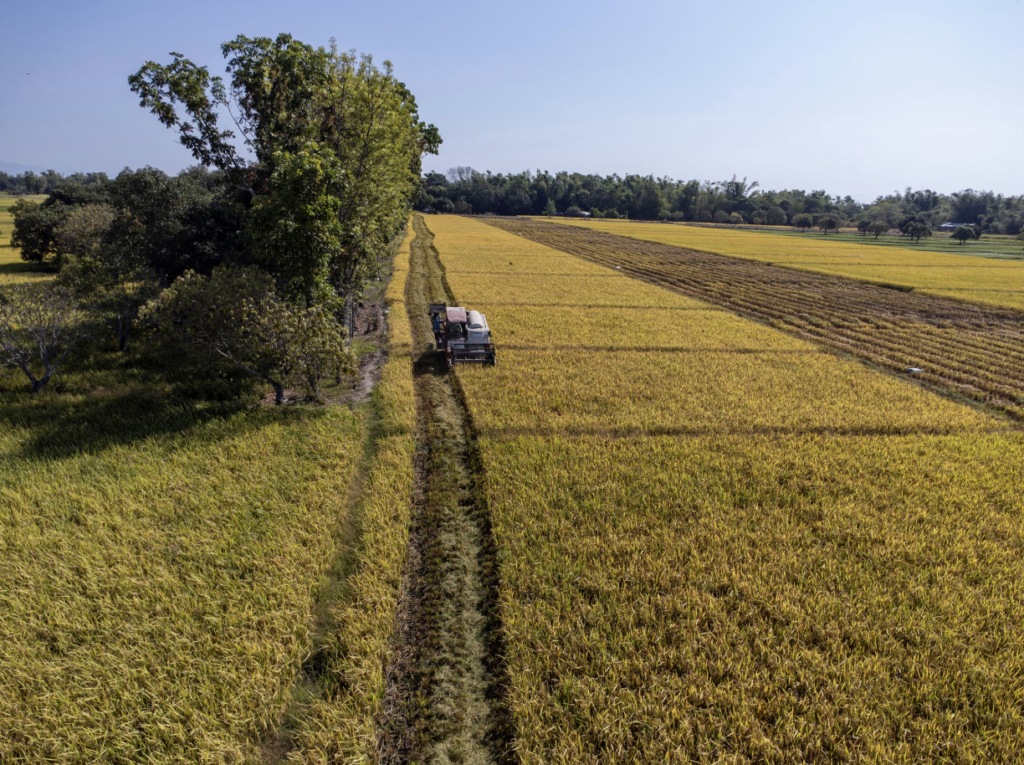
MANILA, Philippines — The Department of Agriculture (DA) has officially lowered its expectations for a record-breaking year in rice production, citing a “perfect storm” of skyrocketing input costs and looming climate risks. Agriculture Secretary and spokesperson Arnel de Mesa confirmed that the initial target of 20.28 million metric tons (MT) of palay for 2026 is no longer achievable.
The revision comes as Filipino farmers struggle with the ripple effects of the conflict in the Middle East and the anticipated return of El Niño later this year.
The DA has issued several downward revisions to the national palay output forecast for 2026:
- Initial Target: 20.28 million MT (Projected to be 1.1% higher than the 2023 record).
- Current Baseline: 19.87 million MT.
- Worst-Case Scenario: Output could plunge to as low as 18.6 million to 18.8 million MT if high fuel and fertilizer prices persist through the peak planting season.
The primary drivers of the lowered forecast are the surge in essential farming expenses:
- Fuel and Machinery: Land preparation, which peaks in May and June, relies heavily on tractors and cultivators. With fuel prices projected between ₱150 and ₱190 per liter, the cost of land preparation alone has become prohibitive for many small-scale farmers.
- Fertilizer Prices: A 50-kilogram bag of urea now costs an average of ₱2,490, compared to ₱1,675 during the same period last year. In some regions like Ilocos, prices have reached ₱2,900.
- Reduced Usage: The DA fears that farmers will choose to under-fertilize their crops to save money, leading to significantly lower yields per hectare during the harvest season.
Beyond the economic challenges, the agricultural sector faces a significant threat from the El Niño phenomenon, which is expected to intensify during the latter half of the year.
- Peak Harvest Threat: The impact of El Niño is expected to coincide with the major harvest period in September and October.
- Mitigation Efforts: Secretary De Mesa emphasized that the government is working to “maintain” current production levels rather than grow them, focusing on small-scale irrigation and fertilizer subsidies to prevent a total output collapse.
The expected shortfall in local production may force the Philippines to rely more heavily on rice imports to stabilize domestic prices. However, global rice prices also remain sensitive to fuel costs and regional shipping disruptions, complicating the national food security outlook for the rest of 2026.