
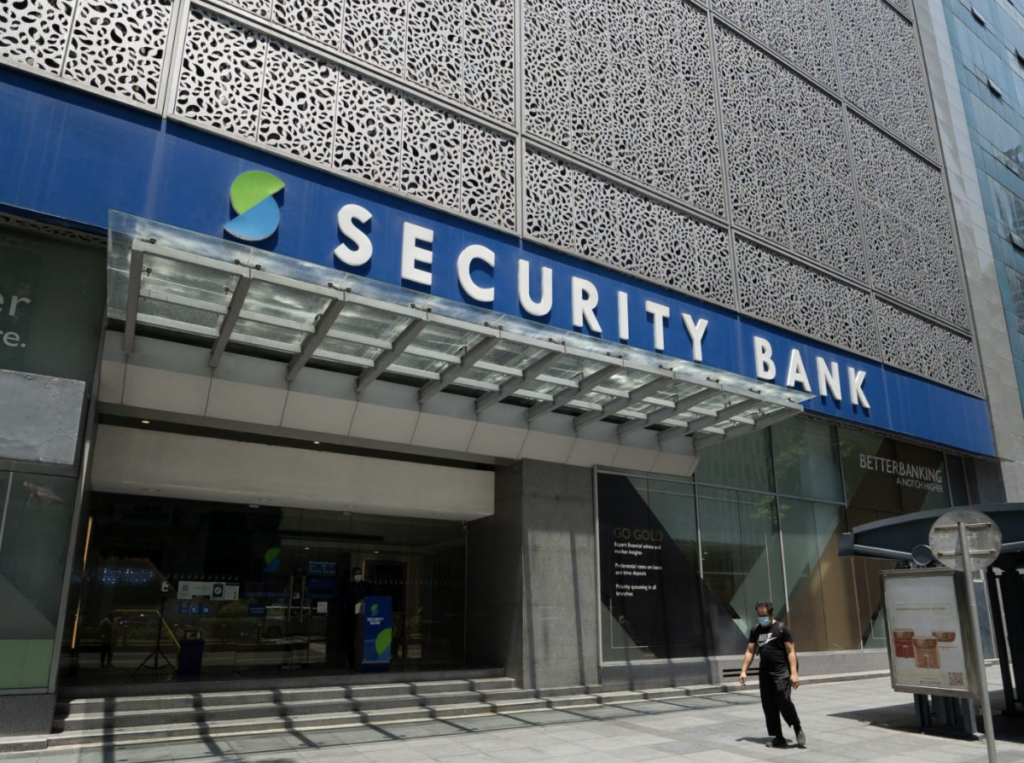
MANILA, Philippines — Security Bank Corporation has officially unveiled its most ambitious sustainability roadmap to date, pledging to reduce its operational greenhouse gas emissions by 62 percent by the year 2035. The commitment aligns with the bank’s broader Environmental, Social, and Governance (ESG) framework and the Philippines’ national goals for climate action.
The announcement, released on Wednesday, April 22, 2026, highlights the bank’s shift toward “green banking” and its proactive role in financing the country’s transition to a low-carbon economy.
Security Bank’s strategy to hit the 62-percent reduction target focuses on three primary areas:
- Operational Efficiency: The bank aims to transition at least 50% of its branch network to renewable energy sources through rooftop solar installations and retail electricity supply (RES) agreements.
- Digital Transformation: By accelerating its “Cloud-First” strategy, the bank expects to significantly reduce the carbon footprint associated with physical data centers and paper-intensive manual processes.
- Sustainable Procurement: Security Bank will implement stricter ESG criteria for its vendors, prioritizing partners who demonstrate their own verifiable carbon reduction pathways.
Beyond its own operations, the bank is addressing its “financed emissions”—the carbon footprint of the businesses it lends to.
- Coal Divestment: Security Bank reaffirmed its commitment to exit coal-fired power plant financing by 2033, a goal it set in its initial sustainability report.
- Green Financing: The bank plans to double its sustainable finance portfolio by 2030, targeting investments in renewable energy, sustainable agriculture, and climate-resilient infrastructure.
- ESG Integration: Every major corporate loan application now undergoes a rigorous ESG risk assessment to ensure alignment with the bank’s long-term climate targets.
Security Bank President and CEO Sanjeev Anand emphasized that the 62-percent target is a baseline, not a ceiling.
“Sustainability is no longer a peripheral concern; it is core to our business strategy. By committing to these measurable targets, we are ensuring that Security Bank remains a resilient and responsible institution for the next generation of Filipinos.”
The bank’s sustainability reporting follows the standards set by the Task Force on Climate-related Financial Disclosures (TCFD) and the Global Reporting Initiative (GRI), ensuring transparency and comparability for international investors.
The bank’s move comes at a time when the Philippine financial sector is under increasing pressure from the Bangko Sentral ng Pilipinas (BSP) to integrate climate change risks into their internal capital adequacy assessments. As one of the most climate-vulnerable nations, the Philippines is seeing a trend where major lenders are competing to present the most aggressive decarbonization schedules.